US Taxation: A Quick Guide for Beginners!

06f – Form 1099-MISC vs. Form 1099-NEC

📄 Form 1099-MISC vs. Form 1099-NEC :- Both forms are used to report non-wage payments, but they serve different purposes after the IRS split reporting in 2020. 🔍 Form 1099-MISC – Miscellaneous Information 🔍 Form 1099-NEC – Nonemployee Compensation 📊 Form 1099-MISC vs. Form 1099-NEC – Key Differences 🔹 Purpose *1099-MISC → Reports miscellaneous payments (rent, royalties, prizes, legal settlements, etc.) *1099-NEC → Reports nonemployee compensation (independent contractors, freelancers, gig workers) 🔹 Payment Types *1099-MISC → Rent, royalties, awards, certain attorney fees, other income over $600 *1099-NEC → Services performed by nonemployees, $600+ payments for freelance/contract work 🔹 Who Gets It *1099-MISC → Landlords, attorneys, prize winners, royalty earners, etc. *1099-NEC → Freelancers, consultants, service providers, gig workers 🔹 Filing Deadline *1099-MISC → To Recipient: January 31 To IRS: Feb 28 (Paper) / Mar 31 (E-file) *1099-NEC → To Recipient & IRS: January 31 (same for both) 🔹 IRS Change (Since 2020) Before 2020, nonemployee compensation was reported on 1099-MISC (Box 7). Now, it must be reported separately on 1099-NEC. 💡 Example: – Paid $10,000 to a contractor → Report on 1099-NEC – Paid $15,000 office rent → Report on 1099-MISC

06f – Form 1099-MISC vs. Form 1099-NEC Read More »

06e – Form 1099-DIV – Dividends and Distributions

📄 Form 1099-DIV – Dividends and Distributions:- Form 1099-DIV is an IRS tax form used to report dividends and certain distributions paid to taxpayers by banks, corporations, mutual funds, and other financial institutions. If you earned $10 or more in dividends during the year, the payer must issue this form. 🔍 Key Points:- 1️⃣ Who issues it? • Corporations, mutual funds, ETFs, brokers, and other investment companies. 2️⃣ Who receives it? • Investors who earned taxable dividends or capital gains distributions. 3️⃣ What does it contain? • Ordinary dividends • Qualified dividends (taxed at lower capital gains rates) • Capital gain distributions • Non-dividend distributions (return of capital) • Federal income tax withheld (if applicable) 4️⃣ When is it issued? • Must be provided to taxpayers by January 31 of the following year. 5️⃣ Why is it important? • Dividend income must be reported on Form 1040, often with Schedule B if over $1,500. • The IRS uses it to verify your reported investment income. 💡 Example: If you own shares in a mutual fund and receive $200 in qualified dividends and $50 in capital gain distributions in 2024, you’ll get Form 1099-DIV from the fund by January 31, 2025 to report on your 2024 tax return. ✅ Tip: Qualified dividends may be taxed at a lower rate, so reporting them correctly can reduce your tax bill.  

06e – Form 1099-DIV – Dividends and Distributions Read More »

06d – Form 1099-INT – Interest Income

📄 Form 1099-INT – Interest Income Form 1099-INT is an IRS tax form used to report interest income you earned during the year. Banks, credit unions, brokerage firms, and other financial institutions issue it if they paid you $10 or more in interest. 🔍 Key Points 1️⃣ Who issues it? • Financial institutions (banks, brokerages, credit unions, etc.). 2️⃣ Who receives it? • Individuals or businesses that earned taxable interest. 3️⃣ What does it contain? • Total interest income earned • Tax-exempt interest (if any) • Federal income tax withheld (if backup withholding applied) • Early withdrawal penalties (if applicable) 4️⃣ When is it issued? • Must be sent to taxpayers by January 31 of the following year. 5️⃣ Why is it important? • You must report interest income on your Form 1040. • The IRS receives a copy to verify your tax filing. 💡 Example: If your savings account earned $250 in 2024 interest, your bank will send you a Form 1099-INT by January 31, 2025 to include in your 2024 tax return. ✅ Tip: Even if you don’t receive a 1099-INT (e.g., interest under $10), you are still required to report all taxable interest.

06d – Form 1099-INT – Interest Income Read More »

06c1 – Form W-2 Explained (Withholding Tax)

📘 What is Form W-2 ? Employers in the U.S. give Form W-2, Wage and Tax Statement to employees each year. It shows income earned and taxes withheld from pay checks. 🏦 Withholding Tax (shown on W-2) :- When you earn wages, your employer withholds certain taxes from your pay check and reports them on your W-2: 1.   Federal Income Tax Withheld (Box 2) o  Based on IRS tax tables and the information you gave on Form W-4. 2.   Social Security Tax Withheld (Box 4) o  6.2% of wages (up to annual wage base limit). 3.   Medicare Tax Withheld (Box 6) o  1.45% of wages (no limit, plus 0.9% extra if income is high). 4.   State & Local Taxes Withheld (Boxes 17 & 19, if applicable) o  Based on your state/local income tax rules. 👉 At year-end, when you file your Form 1040, the amounts withheld on the W-2 are credited against your total tax liability.

06c1 – Form W-2 Explained (Withholding Tax) Read More »

06c – Form W-2 – Wage and Tax Statement (Summary of Wages/paycheck)

📄 Form W-2 – Wage and Tax Statement (Summary of Wages/paycheck) Form W-2 is an IRS tax form that employers must provide to employees each year. It reports the employee’s annual wages and the taxes withheld from their paycheck . 🔍 Key Points 1️⃣ Who issues it? • Employers send it to both the employee and the IRS. 2️⃣ Who receives it? • All employees (not independent contractors — they get Form 1099-NEC). 3️⃣ What does it contain? • Total wages, tips, and other compensation • Federal income tax withheld • Social Security and Medicare taxes withheld • State/local taxes withheld (if applicable) • Employer & employee identifying information 4️⃣ When is it issued? • Employers must send Form W-2 by January 31 of the following year. 5️⃣ Why is it important? • Employees use it to file Form 1040 for their income tax return. • The IRS matches your tax return against W-2 data to ensure accuracy. 💡 Example: If you worked for a company in 2024, you should receive your W-2 by January 31, 2025, to report your wages and withholdings for your 2024 tax return. ✅ Tip: Always check your W-2 for accuracy. If there’s an error, request a corrected version (Form W-2c).

06c – Form W-2 – Wage and Tax Statement (Summary of Wages/paycheck) Read More »

06b – Income Documents

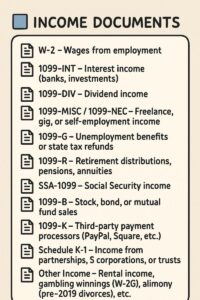
🧾 Filing IRS Form 1040 (Individual Return) Don’t Forget These Key Supporting Documents! While the IRS doesn’t require you to submit all documents with your Form 1040, you must keep them for your records — especially in case of an audit or income verification. Here’s a checklist of commonly required documents based on income types: 🔹 INCOME DOCUMENTS 📄 W-2 – Wages from employment 1099 series → 📄 1099-INT – Interest income (banks, investments) 📄 1099-DIV – Dividend income 📄 1099-MISC / 1099-NEC – Freelance, gig, or self-employment income 📄 1099-G – Unemployment benefits or state tax refunds 📄 1099-R – Retirement distributions, pensions, annuities 📄 SSA-1099 – Social Security income 📄 1099-B – Stock, bond, or mutual fund sales 📄 1099-K – Third-party payment processors (PayPal, Square, etc.) 📄 Schedule K-1 – Income from partnerships, S corporations, or trusts 📄 Other Income – Rental income, gambling winnings (W-2G), alimony (pre-2019 divorces), etc. ✔️ These forms flow directly into the Income section of Form 1040 — essential for tax filing. 💡 Tip: Keep digital or physical copies organized by category — this will save you time and stress later!  

06b – Income Documents Read More »

06a – Topic: Concept of Income – What’s Taxable Income vs. Non-Taxable Income?

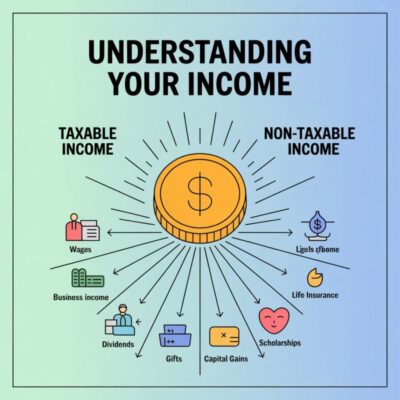
Topic: Concept of Income – What’s Taxable Income vs. Non-Taxable Income? Understanding what counts as income is essential for proper tax filing in the US 🔹 1. Types of Taxable Income:- ✅ Wages, Salaries, Tips ✅ Business/Professional Income ✅ Interest & Dividends ✅ Rental Income ✅ Capital Gains ✅ Unemployment Benefits ✅ Social Security (sometimes taxable) 🔹 2. Types of Non-Taxable Income:- ❌ Life Insurance Proceeds (if due to death) ❌ Gifts & Inheritances ❌ Child Support Payments ❌ Municipal Bond Interest ❌ Certain Scholarships/Fellowships ❌ Welfare & Public Assistance 💡 Tip: Not all income is treated equally — always check IRS rules or consult a tax professional for proper classification.

06a – Topic: Concept of Income – What’s Taxable Income vs. Non-Taxable Income? Read More »

05 – Topic: Filing Requirements – Who Must File a Tax Return for 2025?

Topic: Filing Requirements – Who Must File a Tax Return? ✅ You must file a return if: 🔹 You are a US citizen who lived in or earned income from a US 🔹 You want to claim a tax refund or avail tax credits (even if you’re not required to file otherwise). 💡 Tip: Even if your income is below the filing threshold, filing might benefit you by getting back withheld taxes or claiming refundable credits like EITC or CTC.

05 – Topic: Filing Requirements – Who Must File a Tax Return for 2025? Read More »

04 – Topic: Tax Filing Status

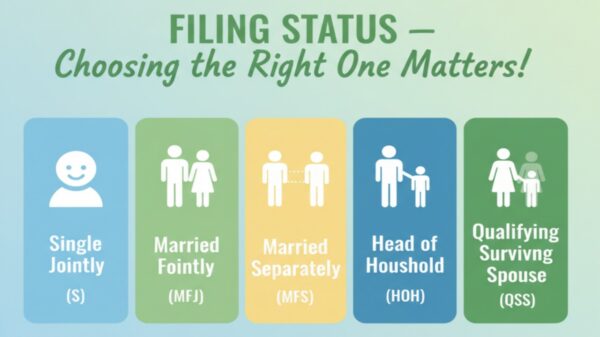
Topic: Tax Filing Status  Single, Married Filing Jointly (MFJ), Married Filing Separately (MFS), Head of Household, Qualifying Widow(er)The IRS provides five filing statuses, which determine the standard deduction and tax brackets. 1️⃣ Single 🔹 Applicable if you’re not married, divorced, or legally separated as of 12/31. The simplest status there is. You’re Single if, on December 31 of the tax year, you’re not married, legally separated, or divorced. That’s it. You don’t qualify as Head of Household, and you don’t have a dependent that changes your status. Most young adults, college grads, and anyone living independently fall under this category. Example: Chris is 29, works full-time, and isn’t married or supporting anyone. He lives by himself, pays his own bills, and no one can claim him as a dependent. Chris files Single on his 1040. Common mistake: People sometimes think they can file as Head of Household just because they help family with money. But unless you provide over half the cost of maintaining a home for a qualifying dependent, you’re still considered Single.   2️⃣ Married Filing Jointly (MFJ) 🔹 Both spouses agree to file a joint return. 🔹 Return must be signed by both. 🔹 Exceptions: ❌ One spouse is a Non-Resident Alien ❌ Different accounting years If you’re legally married on the last day of the year, you can file a joint return with your spouse. This combines both of your incomes, credits, and deductions into one tax return. Joint filing is the most common choice for married couples because it’s usually simpler and offers better overall tax treatment than filing separately. However, both spouses are jointly responsible for the information and any tax due—so trust and transparency are key. Example: Jordan and Taylor got married in October. Jordan earned $80,000, and Taylor earned $40,000. Since they’re married by December 31, they can file Married Filing Jointly for the entire year. Why some couples choose this: It simplifies paperwork, allows for shared credits, and avoids duplication of forms. But it also means if one spouse forgets to report income or owes back taxes, both are liable.   3️⃣ Married Filing Separately (MFS) 🔹 Married as of 12/31 but choose to file separate returns. 🔹 Often used for tax or legal reasons. This status is for couples who are legally married but want or need to file their taxes individually. Each spouse reports only their own income, deductions, and credits. It’s not common, but there are legitimate reasons to do it. Some people don’t want to be held responsible for their spouse’s tax situation. Others might have specific financial circumstances—like high medical expenses or ongoing legal issues—where separate filing makes sense. Example: Alex and Morgan are married, but Morgan owes back taxes from years ago. Alex doesn’t want their joint refund to be taken by the IRS to pay off Morgan’s debt. To avoid that, they file Married Filing Separately. Things to keep in mind: Both spouses must either itemize or not—one can’t do one while the other doesn’t. Many tax credits and deductions are limited or unavailable when filing separately. Separate returns can be useful if the couple is separated, divorcing, or maintaining financial independence. This filing status is mainly about boundaries—financial and legal ones. 4️⃣ Head of Household 🔹 Unmarried or considered unmarried. 🔹 Must pay more than half the cost of maintaining a home for self and a qualifying person (like a child or dependent relative). 🔹 Often results in a lower tax rate than Single. This one is often misunderstood, but it can be incredibly beneficial for those who qualify. You file as Head of Household (HOH) if you’re unmarried (or considered unmarried) and you provide more than half the cost of maintaining a home for a qualifying person—usually a child or dependent relative. To qualify: You must be unmarried or considered unmarried on December 31. You must have paid more than half the cost of keeping up your home during the year. A qualifying dependent (child, parent, or relative) must have lived with you for more than half the year, except in cases like a parent you support who doesn’t live with you. Example: Jamie is a single mother of a 7-year-old son, Leo. She works full-time and pays all the household bills. Leo lives with her the entire year, and no one else claims him. Jamie qualifies as Head of Household because she provides over half the support for a dependent and is unmarried. Why people get it wrong: Many taxpayers claim HOH incorrectly by assuming financial support alone qualifies them. The IRS specifically requires a dependent relationship and proof that you pay most of the household expenses. This filing status recognizes single-income households that carry family responsibilities—it’s meant to ease that burden a bit.   5️⃣ Qualifying Widow(er) 🔹 For two years following a spouse’s death. 🔹 Must have a dependent child to qualify. 🔹 Offers the same benefits as Married Filing Jointly. This status is available for two years following the death of a spouse, provided certain conditions are met. It’s designed to help surviving spouses adjust financially while they’re still supporting a dependent child. To qualify: You were eligible to file jointly in the year your spouse died. You haven’t remarried before the end of the current tax year. You have a dependent child living with you for the entire year. Example: Riley’s spouse passed away in 2023. They had a 10-year-old daughter, Ella, who continues to live with Riley. For 2024 and 2025, Riley can file as a Qualifying Surviving Spouse. After that two-year period, Riley would likely file as Head of Household as long as Ella is still a dependent. Why it exists: This status provides short-term stability. Losing a spouse is already emotionally and financially overwhelming, and the IRS recognizes that by allowing surviving spouses to file under the same terms as married couples for two additional years. ✅ Filing the correct status can reduce tax liability and increase eligibility for credits. 📌 Choosing the
04 – Topic: Tax Filing Status Read More »

03c – Taxability at Entity Level

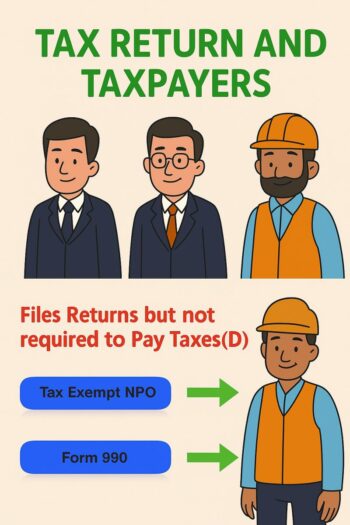
Taxability at Entity Level How certain entities handle their tax obligations ✅ C- Corporation ·        Files tax returns using Form 1120 ·        Pays taxes directly at the entity level ✅ Tax-Exempt Non-Profit Organizations (NPOs) ·        Required to file returns using Form 990 ·        Generally, not required to pay taxes if they maintain their tax-exempt status.

03c – Taxability at Entity Level Read More »