IRS

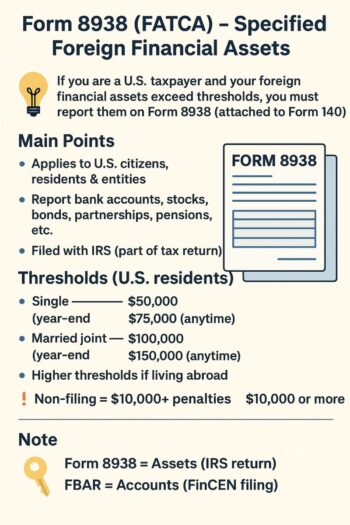
Form 8938 (FATCA) โ€“ Specified Foreign Financial Assets

๐Ÿ’ก Form 8938 (FATCA) โ€“ Specified Foreign Financial Assets :- If you are a U.S. taxpayer and your foreign financial assets exceed certain thresholds, you must report them on Form 8938 (attached to your Form 1040). ๐Ÿ“Œ Main Points :- โ€ข Applies to U.S. citizens, residents & certain entities. โ€ข Report bank accounts, stocks, bonds, foreign partnerships, pensions, life insurance with cash value, etc. โ€ข File with IRS (part of your income tax return). โ€ข Thresholds (U.S. residents): โ€“ Single: > $50,000 (year-end) / $75,000 (anytime) โ€“ Married Filing Jointly: > $100,000 (year-end) / $150,000 (anytime) โ€ข Higher thresholds apply if living abroad. โ€ข Non-filing = $10,000+ penalties (can increase if not corrected). โœ… Example: Foreign Bank A = $40,000 Foreign Stocks = $90,000 ๐Ÿ‘‰ Total = $130,000 โ†’ Single filer โ†’ Form 8938 required. โœจ Easy-to-remember points: *FBAR โ‰  Form 8938 โ†’ Both may apply. *Form 8938 is about assets (attached to IRS return). *FBAR is about accounts (filed separately with FinCEN). ๐Ÿ”‘ Remember: Form 8938 = IRS tax compliance under FATCA, aimed at transparency of offshore wealth.

Form 8938 (FATCA) โ€“ Specified Foreign Financial Assets Read More ยป

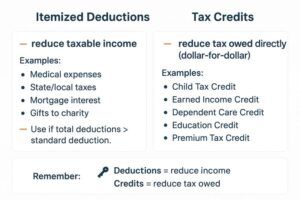
Itemized Deductions vs Tax Credits โ€“ Whatโ€™s the Difference?

๐Ÿ’ก Itemized Deductions vs Tax Credits โ€“ Whatโ€™s the Difference? ๐Ÿ“Œ Itemized Deductions โ†’ reduce your taxable income:- Examples: โ€ข Medical expenses โ€ข State & local taxes โ€ข Mortgage interest โ€ข Gifts to charity ๐Ÿ‘‰ If your deductions are higher than the standard deduction then you select itemize. ๐Ÿ“Œ Tax Credits โ†’ reduce your tax liability directly (dollar-for-dollar) :- Examples: โ€ข Child Tax Credit โ€ข Earned Income Credit โ€ข Dependent Care Credit โ€ข Education Credit โ€ข Premium Tax Credit (health insurance) โœ… Example: *Taxable income = $60,000 *Itemized deductions = $15,000 โ†’ lowers taxable income to $45,000 *Tax = $5,000 โ†’ apply Child Tax Credit $2,000 โ†’ final tax = $3,000 ๐Ÿ”‘ Remember: *Deductions reduce income before tax is calculated. *Credits reduce tax owed after calculation.  

Itemized Deductions vs Tax Credits โ€“ Whatโ€™s the Difference? Read More ยป

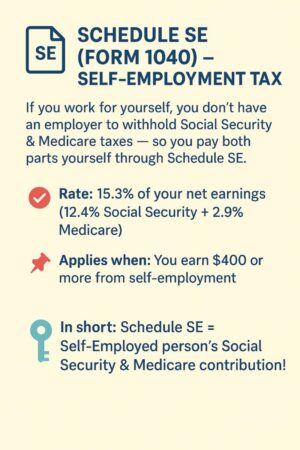
Schedule SE (Form 1040) โ€“ For the Self-Employment Tax

๐Ÿ’ก Schedule SE (Form 1040) โ€“ For the Self-Employment Tax :- If you work for yourself, you donโ€™t have an employer to withhold Social Security & Medicare taxes โ€” so you pay both parts yourself through Schedule SE. ๐Ÿ“Š Self-Employment Tax ๐Ÿ“Œ Rate: 15.3% of your net earnings (12.4% Social Security + 2.9% Medicare) ๐Ÿ“Œ Applies when: You earn $400 or more from self-employment. ๐Ÿงฎ Example: You earn $60,000 from freelancing. โžก๏ธ Taxable portion = 92.35% ร— $60,000 = $55,410 โžก๏ธ Self-Employment Tax = 15.3% ร— $55,410 = $8,473.73 โœ… You can deduct half ($4,236.87) on your Form 1040 to reduce taxable income. hashtag#Noted:-๐Ÿ’ก Why only = 92.35% ? (Taxable portion) *When youโ€™re self-employed, you pay both the employer and employee share of Social Security & Medicare (total 15.3%). *However, the IRS lets you treat the โ€œemployer halfโ€ (7.65%) as a business expense before calculating your self-employment tax. *So instead of paying tax on 100% of your income, you pay it on 92.35% (= 100% โˆ’ 7.65%). ๐Ÿงฎ Example: *Income = $60,000 *Taxable portion = 92.35% ร— $60,000 = $55,410 *Self-employment tax = 15.3% ร— $55,410 = $8,473.73 โœ… This adjustment prevents you from being taxed on the part considered your โ€œemployer contribution.โ€ ๐Ÿ‘‰ 92.35% rule = gives you credit for the employerโ€™s share of payroll taxes that regular employees donโ€™t pay directly. ๐Ÿ”‘ In short: Schedule SE = How self-employed people pay Social Security & Medicare.  

Schedule SE (Form 1040) โ€“ For the Self-Employment Tax Read More ยป

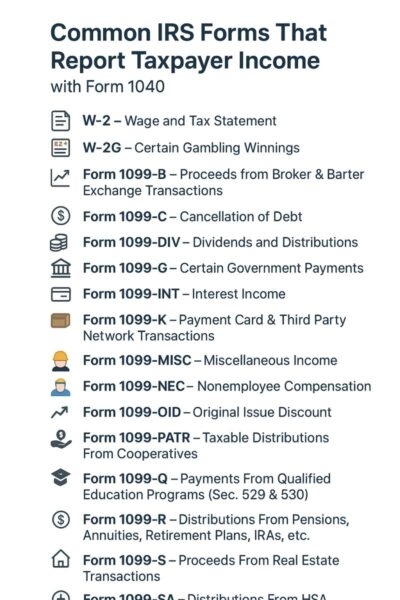
Common IRS Forms That Report Taxpayer Income (with Form 1040)

๐Ÿ’ก Common IRS Forms That Report Taxpayer Income (with Form 1040) Each of these forms can indicate potential sources of gross income for tax reporting:- 1)๐Ÿ“„ W-2 โ€“ Wage and Tax Statement 2)๐ŸŽฐ W-2G โ€“ Certain Gambling Winnings 3)๐Ÿ’น Form 1099-B โ€“ Proceeds from Broker & Barter Exchange Transactions 4)๐Ÿ’ธ Form 1099-C โ€“ Cancellation of Debt 5)๐Ÿฆ Form 1099-DIV โ€“ Dividends and Distributions 6)๐Ÿ›๏ธ Form 1099-G โ€“ Certain Government Payments 7)๐Ÿ’ฐ Form 1099-INT โ€“ Interest Income 8)๐Ÿ’ณ Form 1099-K โ€“ Payment Card & Third Party Network Transactions 9)๐Ÿ“ฆ Form 1099-MISC โ€“ Miscellaneous Income 10)๐Ÿ‘ท Form 1099-NEC โ€“ Nonemployee Compensation 11)๐Ÿ“ˆ Form 1099-OID โ€“ Original Issue Discount 12)๐Ÿค Form 1099-PATR โ€“ Taxable Distributions From Cooperatives 13)๐ŸŽ“ Form 1099-Q โ€“ Payments From Qualified Education Programs (Sec. 529 & 530) 14)๐Ÿช™ Form 1099-R โ€“ Distributions From Pensions, Annuities, Retirement Plans, IRAs, etc. 15)๐Ÿ  Form 1099-S โ€“ Proceeds From Real Estate Transactions 16)๐Ÿ’Š Form 1099-SA โ€“ Distributions From HSA, Archer MSA, or Medicare Advantage MSA 17)๐Ÿ‘ฅ Schedule K-1 (Form 1065) โ€“ Partnerโ€™s Share of Income, Deductions, Credits 18)๐Ÿข Schedule K-1 (Form 1120-S) โ€“ Shareholderโ€™s Share of Income, Deductions, Credits

Common IRS Forms That Report Taxpayer Income (with Form 1040) Read More ยป

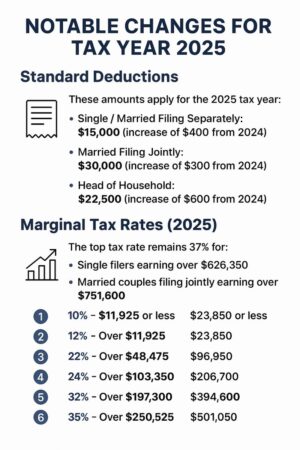
Notable Changes for Tax Year 2025 (Income tax returns to be filed starting tax season 2026)

๐Ÿ’ก Notable Changes for Tax Year 2025 (Income tax returns to be filed starting tax season 2026) Standard deductions AND Marginal Tax rates:- These updates apply to income tax returns filed in 2026 (for the 2025 tax year) ๐Ÿงพ Standard Deductions: *Single / Married Filing Separately: $15,000 (increase of $400 from 2024) *Married Filing Jointly: $30,000 (increase of $800 from 2024) *Head of Household: $22,500 (increase of $600 from 2024) ๐Ÿ“Š Marginal Tax Rates (2025): The top tax rate remains 37% for: *Single filers earning over $626,350 *Married couples filing jointly earning over $751,600 Other rates and brackets: 1)ย 10% โ€“ $11,925 or less (single) / $23,850 or less (married joint) 2)ย 12% โ€“ Over $11,925 (single) / $23,850 (married joint) 3)ย 22% โ€“ Over $48,475 (single) / $96,950 (married joint) 4)ย 24% โ€“ Over $103,350 (single) / $206,700 (married joint) 5) ย 32% โ€“ Over $197,300 (single) / $394,600 (married joint) 6)ย 35% โ€“ Over $250,525 (single) / $501,050 (married joint)

Notable Changes for Tax Year 2025 (Income tax returns to be filed starting tax season 2026) Read More ยป

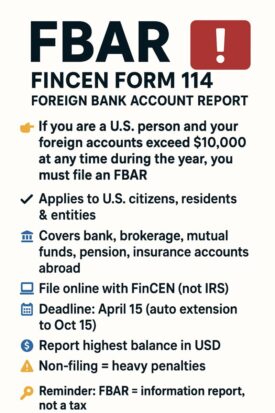
FBAR (FinCEN Form 114) โ€“ Foreign Bank Account Report

๐Ÿ’ก FBAR (FinCEN Form 114) โ€“ Foreign Bank Account Report :-   If you are a U.S. person and your total foreign bank/financial accounts exceed $10,000 at any time during the year, you must file an FBAR. ๐Ÿ“Œ Easy-to-understand points: *Applies to all U.S. citizens, residents, and entities (LLCs, Corps, Trusts). *Includes bank, brokerage, mutual funds, pension, insurance accounts outside the U.S. *File online with FinCEN (not IRS). *Deadline: April 15 (automatic extension to Oct 15). *Report the highest balance (converted to USD). *Non-filing = heavy penalties (even if no tax is due). โœ… Example: National Bank (Pakistan): $5,000 ICICI Bank (India): $5,001 ๐Ÿ‘‰ Total = $10,001 โ†’ FBAR filing required. ๐Ÿ”‘ Remember: FBAR is an information report, not a tax. The goal is transparency of offshore accounts.

FBAR (FinCEN Form 114) โ€“ Foreign Bank Account Report Read More ยป

Qualified Business Income Deduction

Qualified Business Income (QBI) was introduced as part of the Tax Cuts and Jobs Act (TCJA), which was signed into law on December 22, 2017 and will remain valid till the end of 2025 unless extended or modified through legislation. TCJA included several provisions that benefited larger corporations and small businesses alike. It lowered the corporate tax rate from a maximum of 35% to 21% & helped small businesses in shape of QBI. Non-corporate taxpayers are permitted to claim a 20% deduction for income derived through qualified trades or businesses. The deduction is available to individuals who operate qualified businesses as sole proprietorships or through pass-through entities, including partnerships, LLCs and Subchapter S corporations. The QBI deduction is taken โ€œBelow the lineโ€ rather than in computing adjusted taxable income โ€œabove the lineโ€. The deduction may thus be claimed whether the taxpayer itemizes deductions or claims the standard deduction Who qualifies for QBI: The QBI deduction is claimed with reference to the qualified business income from each specified trade or business. QBI is pivotal in determining the deduction available under Section 199A of the Internal Revenue Code, which allows eligible taxpayers to deduct up to 20% of their QBI. Wage and Qualified Property Limitation (WQP): The WQP limitation comes into play for taxpayers with QBI, particularly for high-income earners. This limitation is designed to phase out or limit the QBI deduction based on the amount of W-2 wages paid and the value of qualified property held by the business. Why WQP is important: The WQP limitation helps prevent high-income individuals from abusing the QBI deduction by ensuring that only those with substantial investments in their businesses can benefit fully. It incentivizes businesses to hire employees and invest in property, as the deduction is tied to wages and property. The phase in range for the most recent years is; For 2024, the threshold amount is USD 383,900 for married individuals who file a joint tax return, USD 191,950 for all other individuals

Qualified Business Income Deduction Read More ยป

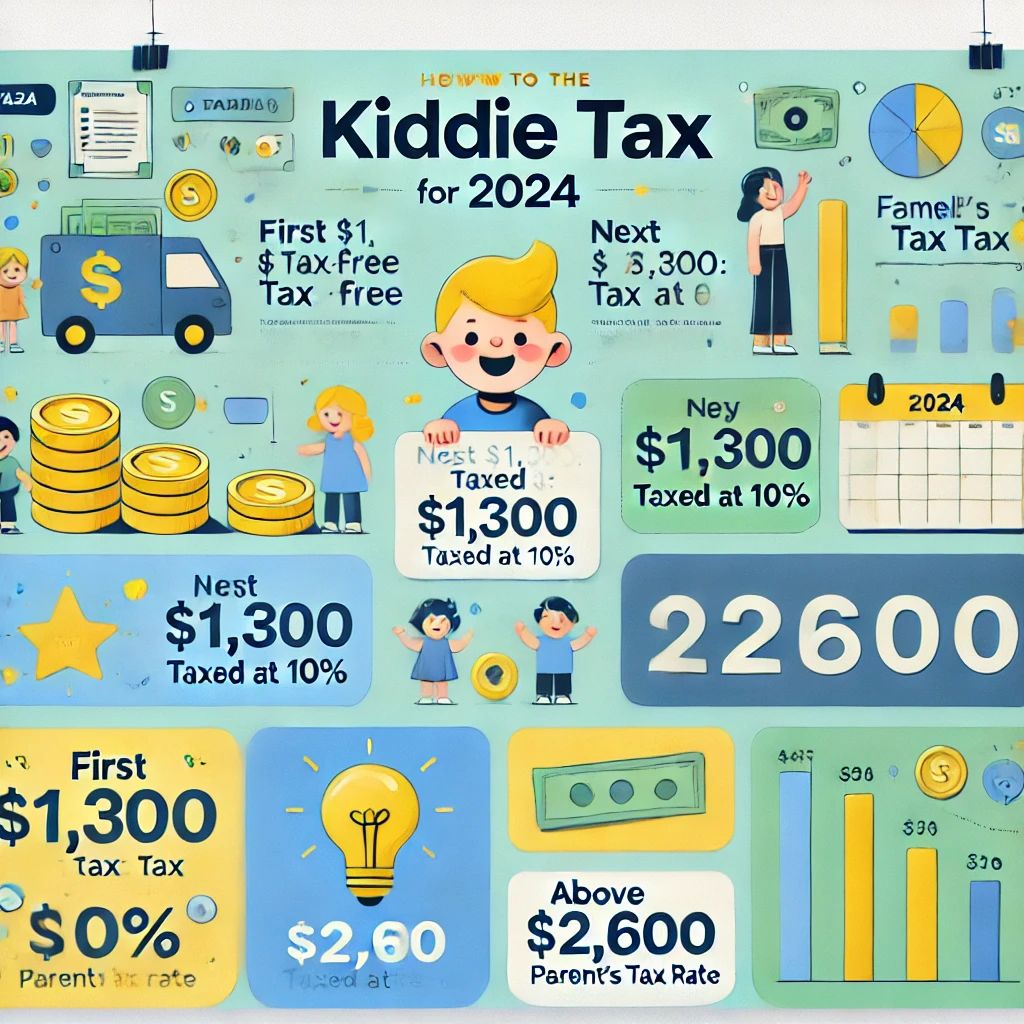
Understanding the Kiddie Tax for 2024: How It Affects Your Childโ€™s Investment Income

As tax season approaches, itโ€™s important to understand how the Kiddie Tax impacts children with investment income. The Kiddie Tax was introduced to prevent parents from shifting investment income to their children to take advantage of lower tax rates. Here’s a quick breakdown of how it works for the 2024 tax year and how it may affect your family. โœจ What is the Kiddie Tax? The Kiddie Tax applies to unearned income (such as dividends, interest, and capital gains) earned by children: ๐ŸŸข Under the age of 18. ๐ŸŸข Aged 18-23, if they are full-time students. Kiddie Tax Thresholds for 2024: 1๏ธโƒฃ First $1,300 of unearned income: Taxed at 0% (covered by the standard deduction for dependents). 2๏ธโƒฃ Next $1,300 of unearned income: Taxed at the childโ€™s own tax rate (usually 10%). 3๏ธโƒฃ Unearned income above $2,600: Taxed at the parents’ tax rate (up to 37%). Example Calculation Letโ€™s say your child is 16 years old and has earned $4,000 in dividends from their investments in 2024: The first $1,300 of income is not taxed (due to the standard deduction for dependents). The next $1,300 is taxed at the childโ€™s tax rate (e.g., 10%). The remaining $1,400 ($4,000 – $2,600) is taxed at the parentsโ€™ marginal tax rate, which could be higher depending on their income. While your child pays a small amount of tax on the first $2,600, the remaining income could be taxed at a significantly higher rate, potentially reducing the benefits of investing in your childโ€™s name. ๐Ÿ—‚ When Does Your Child Need to File a Tax Return? If your childโ€™s unearned income exceeds $2,600 in 2024: A tax return must be filed. They may need to complete Form 8615 to calculate taxes at the parentsโ€™ tax rate. Pro Tip: Parents can include their childโ€™s unearned income on their own tax return (using Form 8814) if itโ€™s less than $13,000 and consists only of interest and dividends. However, this may increase the parentsโ€™ tax liability. ๐Ÿ’ก Ways to Reduce Kiddie Tax Liability Encourage Earned Income: Unearned income is subject to the Kiddie Tax, but earned income (from a part-time job, for example) is not. ๐Ÿ“ˆ Use Tax-Advantaged Accounts: Encourage contributions to Roth IRAs or other tax-advantaged accounts for tax-free growth, avoiding the Kiddie Tax altogether. ๐Ÿ“ Conclusion While the Kiddie Tax can increase the tax rate on your childโ€™s investment income, understanding the rules and planning effectively can help minimize the tax burden. Consult with a tax professional to assess your familyโ€™s situation and explore ways to save on taxes.
Understanding the Kiddie Tax for 2024: How It Affects Your Childโ€™s Investment Income Read More ยป

Form 8621: A Must-Know for U.S. Taxpayers with Foreign Investments

If youโ€™re a U.S. taxpayer investing abroad, Form 8621 might be on your radar. Itโ€™s used to report income, distributions, or even ownership in Passive Foreign Investment Companies (PFICs) โ€” often foreign mutual funds or similar entities. Hereโ€™s a quick breakdown: ๐Ÿ”น Who Needs to File? If you own shares in a PFIC (directly or indirectly) or need to make an election (like QEF or Mark-to-Market). ๐Ÿ”น Why Does It Matter? Non-compliance = penalties! IRS audits can extend indefinitely if Form 8621 isnโ€™t filed. ๐Ÿ”น PFIC Taxes in Action โ€“ Letโ€™s Talk Friends Style! Imagine Chandler invests in a foreign mutual fund, thinking, “Could I BE any more diversified?” But he forgets to file Form 8621. Suddenly, the IRS comes knocking, and Chandlerโ€™s stuck with higher taxes and penalties. Meanwhile, Ross (the nerd he is ) consults a tax expert and makes a QEF election. He reports everything smoothly and keeps the IRS happy. Rachelโ€™s just confused, saying, “Whatโ€™s a PFIC?” while Joey simply asks, “Is that something I can eat?” โš ๏ธ Complexity Alert: PFIC rules are notoriously tricky, but ignoring them isnโ€™t an option. Plan ahead and consult a professional. ๐Ÿ’ก Pro Tip: Early planning saves time and money. Donโ€™t let PFIC taxation surprise you!  

Form 8621: A Must-Know for U.S. Taxpayers with Foreign Investments Read More ยป

๐™๐™ฃ๐™™๐™š๐™ง๐™จ๐™ฉ๐™–๐™ฃ๐™™๐™ž๐™ฃ๐™œ ๐™”๐™ค๐™ช๐™ง ๐™๐™ž๐™ก๐™ž๐™ฃ๐™œ ๐™Ž๐™ฉ๐™–๐™ฉ๐™ช๐™จ ๐™›๐™ค๐™ง ๐™๐™ค๐™ง๐™ข ๐Ÿญ๐Ÿฌ๐Ÿฐ๐Ÿฌ:

๐™๐™ฃ๐™™๐™š๐™ง๐™จ๐™ฉ๐™–๐™ฃ๐™™๐™ž๐™ฃ๐™œ ๐™”๐™ค๐™ช๐™ง ๐™๐™ž๐™ก๐™ž๐™ฃ๐™œ ๐™Ž๐™ฉ๐™–๐™ฉ๐™ช๐™จ ๐™›๐™ค๐™ง ๐™๐™ค๐™ง๐™ข ๐Ÿญ๐Ÿฌ๐Ÿฐ๐Ÿฌ: When it comes to filing your taxes, choosing the right filing status is crucial as it directly impacts your tax rate, deductions, and potential credits. The IRS offers five different filing statuses, each with its own requirements and benefits. In this post, Iโ€™ll break down each status in simple terms to help you determine which one applies to your situation and ensure you file your taxes in the most efficient way possible. ๐Ÿญ. ๐—ฆ๐—ถ๐—ป๐—ด๐—น๐—ฒ: ๐˜ž๐˜ฉ๐˜ฐ?: People who are not married, legally separated, or widowed before 2024. ๐˜›๐˜ข๐˜น ๐˜‰๐˜ฆ๐˜ฏ๐˜ฆ๐˜ง๐˜ช๐˜ต๐˜ด: Generally higher taxes compared to others. ๐˜‹๐˜ฆ๐˜ฑ๐˜ฆ๐˜ฏ๐˜ฅ๐˜ฆ๐˜ฏ๐˜ต๐˜ด: Can claim dependents, but it often results in higher tax. ๐˜’๐˜ฆ๐˜บ ๐˜—๐˜ฐ๐˜ช๐˜ฏ๐˜ต: For those who donโ€™t qualify for any other filing status. ๐Ÿฎ. ๐—›๐—ฒ๐—ฎ๐—ฑ ๐—ผ๐—ณ ๐—›๐—ผ๐˜‚๐˜€๐—ฒ๐—ต๐—ผ๐—น๐—ฑ (๐—›๐—ข๐—›): ๐˜ž๐˜ฉ๐˜ฐ?: Unmarried or considered unmarried, and you pay more than half the cost of keeping a home for a dependent (like a child). ๐˜›๐˜ข๐˜น ๐˜‰๐˜ฆ๐˜ฏ๐˜ฆ๐˜ง๐˜ช๐˜ต๐˜ด: Lower taxes than Single, with higher deductions. ๐˜‹๐˜ฆ๐˜ฑ๐˜ฆ๐˜ฏ๐˜ฅ๐˜ฆ๐˜ฏ๐˜ต๐˜ด: Must have a dependent living with you (e.g., child or parent). ๐˜’๐˜ฆ๐˜บ ๐˜—๐˜ฐ๐˜ช๐˜ฏ๐˜ต: You must meet specific rules to qualify, like living apart from a spouse. ๐Ÿฏ. ๐— ๐—ฎ๐—ฟ๐—ฟ๐—ถ๐—ฒ๐—ฑ ๐—™๐—ถ๐—น๐—ถ๐—ป๐—ด ๐—๐—ผ๐—ถ๐—ป๐˜๐—น๐˜† (๐— ๐—™๐—): ๐˜ž๐˜ฉ๐˜ฐ?: Married couples who file together, combining their incomes and deductions. ๐˜›๐˜ข๐˜น ๐˜‰๐˜ฆ๐˜ฏ๐˜ฆ๐˜ง๐˜ช๐˜ต๐˜ด: Lowest tax rates and highest deductions. ๐˜‹๐˜ฆ๐˜ฑ๐˜ฆ๐˜ฏ๐˜ฅ๐˜ฆ๐˜ฏ๐˜ต๐˜ด: Both spouses can claim dependents together. ๐˜’๐˜ฆ๐˜บ ๐˜—๐˜ฐ๐˜ช๐˜ฏ๐˜ต: Both spouses share responsibility for taxes, but it offers significant savings. ๐Ÿฐ. ๐— ๐—ฎ๐—ฟ๐—ฟ๐—ถ๐—ฒ๐—ฑ ๐—™๐—ถ๐—น๐—ถ๐—ป๐—ด ๐—ฆ๐—ฒ๐—ฝ๐—ฎ๐—ฟ๐—ฎ๐˜๐—ฒ๐—น๐˜† (๐— ๐—™๐—ฆ): ๐˜ž๐˜ฉ๐˜ฐ?: Married couples who choose to file separately. ๐˜›๐˜ข๐˜น ๐˜‰๐˜ฆ๐˜ฏ๐˜ฆ๐˜ง๐˜ช๐˜ต๐˜ด: Higher taxes and fewer deductions. ๐˜‹๐˜ฆ๐˜ฑ๐˜ฆ๐˜ฏ๐˜ฅ๐˜ฆ๐˜ฏ๐˜ต๐˜ด: Can claim dependents, but many tax benefits are limited. ๐˜’๐˜ฆ๐˜บ ๐˜—๐˜ฐ๐˜ช๐˜ฏ๐˜ต: This is usually less beneficial tax-wise but may be useful if you want to avoid sharing tax responsibility with your spouse. ๐Ÿฑ. ๐—ค๐˜‚๐—ฎ๐—น๐—ถ๐—ณ๐˜†๐—ถ๐—ป๐—ด ๐—ฆ๐˜‚๐—ฟ๐˜ƒ๐—ถ๐˜ƒ๐—ถ๐—ป๐—ด ๐—ฆ๐—ฝ๐—ผ๐˜‚๐˜€๐—ฒ (๐—ค๐—ฆ๐—ฆ): ๐˜ž๐˜ฉ๐˜ฐ?: Widowed in 2022 or 2023, with a dependent child living with you, and not remarried by the end of 2024. ๐˜›๐˜ข๐˜น ๐˜‰๐˜ฆ๐˜ฏ๐˜ฆ๐˜ง๐˜ช๐˜ต๐˜ด: Same tax benefits as Married Filing Jointly. ๐˜‹๐˜ฆ๐˜ฑ๐˜ฆ๐˜ฏ๐˜ฅ๐˜ฆ๐˜ฏ๐˜ต๐˜ด: Must have a dependent child living with you. ๐˜’๐˜ฆ๐˜บ ๐˜—๐˜ฐ๐˜ช๐˜ฏ๐˜ต: You can file as if youโ€™re still married for up to two years after your spouseโ€™s death (if no remarriage).

๐™๐™ฃ๐™™๐™š๐™ง๐™จ๐™ฉ๐™–๐™ฃ๐™™๐™ž๐™ฃ๐™œ ๐™”๐™ค๐™ช๐™ง ๐™๐™ž๐™ก๐™ž๐™ฃ๐™œ ๐™Ž๐™ฉ๐™–๐™ฉ๐™ช๐™จ ๐™›๐™ค๐™ง ๐™๐™ค๐™ง๐™ข ๐Ÿญ๐Ÿฌ๐Ÿฐ๐Ÿฌ: Read More ยป