Deductions

Itemized Deductions vs Tax Credits โ€“ Whatโ€™s the Difference?

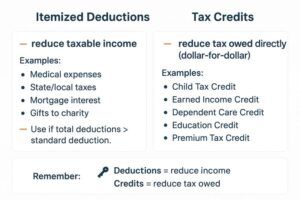
๐Ÿ’ก Itemized Deductions vs Tax Credits โ€“ Whatโ€™s the Difference? ๐Ÿ“Œ Itemized Deductions โ†’ reduce your taxable income:- Examples: โ€ข Medical expenses โ€ข State & local taxes โ€ข Mortgage interest โ€ข Gifts to charity ๐Ÿ‘‰ If your deductions are higher than the standard deduction then you select itemize. ๐Ÿ“Œ Tax Credits โ†’ reduce your tax liability directly (dollar-for-dollar) :- Examples: โ€ข Child Tax Credit โ€ข Earned Income Credit โ€ข Dependent Care Credit โ€ข Education Credit โ€ข Premium Tax Credit (health insurance) โœ… Example: *Taxable income = $60,000 *Itemized deductions = $15,000 โ†’ lowers taxable income to $45,000 *Tax = $5,000 โ†’ apply Child Tax Credit $2,000 โ†’ final tax = $3,000 ๐Ÿ”‘ Remember: *Deductions reduce income before tax is calculated. *Credits reduce tax owed after calculation.  

Itemized Deductions vs Tax Credits โ€“ Whatโ€™s the Difference? Read More ยป

Schedule SE (Form 1040) โ€“ For the Self-Employment Tax

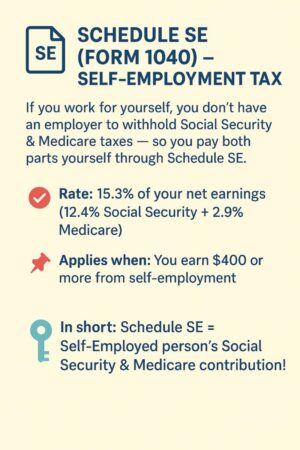
๐Ÿ’ก Schedule SE (Form 1040) โ€“ For the Self-Employment Tax :- If you work for yourself, you donโ€™t have an employer to withhold Social Security & Medicare taxes โ€” so you pay both parts yourself through Schedule SE. ๐Ÿ“Š Self-Employment Tax ๐Ÿ“Œ Rate: 15.3% of your net earnings (12.4% Social Security + 2.9% Medicare) ๐Ÿ“Œ Applies when: You earn $400 or more from self-employment. ๐Ÿงฎ Example: You earn $60,000 from freelancing. โžก๏ธ Taxable portion = 92.35% ร— $60,000 = $55,410 โžก๏ธ Self-Employment Tax = 15.3% ร— $55,410 = $8,473.73 โœ… You can deduct half ($4,236.87) on your Form 1040 to reduce taxable income. hashtag#Noted:-๐Ÿ’ก Why only = 92.35% ? (Taxable portion) *When youโ€™re self-employed, you pay both the employer and employee share of Social Security & Medicare (total 15.3%). *However, the IRS lets you treat the โ€œemployer halfโ€ (7.65%) as a business expense before calculating your self-employment tax. *So instead of paying tax on 100% of your income, you pay it on 92.35% (= 100% โˆ’ 7.65%). ๐Ÿงฎ Example: *Income = $60,000 *Taxable portion = 92.35% ร— $60,000 = $55,410 *Self-employment tax = 15.3% ร— $55,410 = $8,473.73 โœ… This adjustment prevents you from being taxed on the part considered your โ€œemployer contribution.โ€ ๐Ÿ‘‰ 92.35% rule = gives you credit for the employerโ€™s share of payroll taxes that regular employees donโ€™t pay directly. ๐Ÿ”‘ In short: Schedule SE = How self-employed people pay Social Security & Medicare.  

Schedule SE (Form 1040) โ€“ For the Self-Employment Tax Read More ยป

Qualified Business Income Deduction

Qualified Business Income (QBI) was introduced as part of the Tax Cuts and Jobs Act (TCJA), which was signed into law on December 22, 2017 and will remain valid till the end of 2025 unless extended or modified through legislation. TCJA included several provisions that benefited larger corporations and small businesses alike. It lowered the corporate tax rate from a maximum of 35% to 21% & helped small businesses in shape of QBI. Non-corporate taxpayers are permitted to claim a 20% deduction for income derived through qualified trades or businesses. The deduction is available to individuals who operate qualified businesses as sole proprietorships or through pass-through entities, including partnerships, LLCs and Subchapter S corporations. The QBI deduction is taken โ€œBelow the lineโ€ rather than in computing adjusted taxable income โ€œabove the lineโ€. The deduction may thus be claimed whether the taxpayer itemizes deductions or claims the standard deduction Who qualifies for QBI: The QBI deduction is claimed with reference to the qualified business income from each specified trade or business. QBI is pivotal in determining the deduction available under Section 199A of the Internal Revenue Code, which allows eligible taxpayers to deduct up to 20% of their QBI. Wage and Qualified Property Limitation (WQP): The WQP limitation comes into play for taxpayers with QBI, particularly for high-income earners. This limitation is designed to phase out or limit the QBI deduction based on the amount of W-2 wages paid and the value of qualified property held by the business. Why WQP is important: The WQP limitation helps prevent high-income individuals from abusing the QBI deduction by ensuring that only those with substantial investments in their businesses can benefit fully. It incentivizes businesses to hire employees and invest in property, as the deduction is tied to wages and property. The phase in range for the most recent years is; For 2024, the threshold amount is USD 383,900 for married individuals who file a joint tax return, USD 191,950 for all other individuals

Qualified Business Income Deduction Read More ยป

Salaried Class Taxation In USA

US Federal income tax is applied on income of salaried individuals based on gross income less allowable deductions. The tax is initially collected as withholding from employees and deposited with the IRS by the employers each month. In computing the taxable income there are 2 types of deductions that are allowed to the employees. โ€œAbove the Line deductionsโ€ i-e Gross income less certain specified deductions to reach at Adjusted Gross income (AGI) and โ€œBelow the line deductionsโ€ i-e AGI less standard deductions/itemized deductions. 1.ย ย ย ย Health savings account contributions (HAS): Contributions to HSA is deductible if individual is eligible 2.ย ย ย ย Commuting expenses: Specifically for those employees who need to carry tools or equipment to the work place & incurred additional commuting cost for transportation. This additional cost is deductible. 3.ย ย ย ย Automobile expenses: Expense incurred on Personal vehicle used for business purposes are deductible. There are 2 ways to calculate the deduction amount. a)ย ย ย ย ย Actual basis: Actual expenses on running & maintaining the vehicle attributable to business use b)ย ย ย ย Mileage rate: IRS publishes a standard business mileage rate each year for business miles driven. Normally this method is used. (67cents per mile for TY 2024) 4.ย ย ย ย Travel expense: Reasonable and necessary travel expenses are deductible for business purposes. The primary intention of travel must be business. Meals are 50% deductible while on business travel. (very detailed rules available for interested people). 5.ย ย ย ย Foreign travel: Not deductible unless it is purely for business purposes. 6.ย ย ย ย Entertainment, meals and business gifts: 50% deductible subject to certain conditions and restrictions 7.ย ย ย ย Home office expense: Subject to certain conditions these expense are deductible. In case of employees, it must be demonstrated that home office use is for the convenience of employer 8.ย ย ย ย Dues and subscriptions: Dues and other payments to labor unions, trade associations and professional organizations are fully deductible. 9.ย ย ย ย Education expenses: These are deductible subject to certain conditions and restrictions. 10.ย Interest on education loans: Interest paid on qualified education loans is deductible Above all are itemized deductions and employee has option either to claim total of itemized deductions or standard deductions whichever is more beneficial. Standard deduction amounts are adjusted each year for inflation & vary based on the filing status of the taxpayer. For 2024, the following are standard deduction amounts Single: $14,600 Married Filing Jointly: $29,200 Married Filing Separately: $14,600 Head of Household: $21,900 Above is a basic idea about deductions available to salaried/self employed persons and list is not exhaustive, may be more or less depending on case to case basis.

Salaried Class Taxation In USA Read More ยป

๐–๐ก๐ฒ ๐ข๐ฌ ๐ฌ๐ž๐ฅ๐Ÿ-๐ž๐ฆ๐ฉ๐ฅ๐จ๐ฒ๐ฆ๐ž๐ง๐ญ ๐ญ๐š๐ฑ ๐œ๐š๐ฅ๐œ๐ฎ๐ฅ๐š๐ญ๐ž๐ ๐จ๐ง ๐จ๐ง๐ฅ๐ฒ ๐Ÿ—๐Ÿ.๐Ÿ‘๐Ÿ“% ๐จ๐Ÿ ๐ฒ๐จ๐ฎ๐ซ ๐ž๐š๐ซ๐ง๐ข๐ง๐ ๐ฌ?

๐๐ฎ๐ž๐ฌ๐ญ๐ข๐จ๐ง:”๐–๐ก๐ฒ ๐๐จ๐ž๐ฌ ๐ญ๐ก๐ž ๐ˆ๐‘๐’ ๐จ๐ง๐ฅ๐ฒ ๐ญ๐š๐ฑ ๐Ÿ—๐Ÿ.๐Ÿ‘๐Ÿ“% ๐จ๐Ÿ ๐ฆ๐ฒ ๐ฌ๐ž๐ฅ๐Ÿ-๐ž๐ฆ๐ฉ๐ฅ๐จ๐ฒ๐ฆ๐ž๐ง๐ญ ๐ž๐š๐ซ๐ง๐ข๐ง๐ ๐ฌ? ๐ƒ๐ข๐ ๐ญ๐ก๐ž๐ฒ ๐ฃ๐ฎ๐ฌ๐ญ ๐ฉ๐ข๐œ๐ค ๐š ๐ซ๐š๐ง๐๐จ๐ฆ ๐ง๐ฎ๐ฆ๐›๐ž๐ซ?” ๐€๐ง๐ฌ๐ฐ๐ž๐ซ (๐ฐ๐ข๐ญ๐ก ๐š ๐ญ๐ฐ๐ข๐ฌ๐ญ): Nope, itโ€™s not random, and the IRS isnโ€™t rolling dice to mess with us (this time). Itโ€™s actually a ๐ฅ๐ข๐ญ๐ญ๐ฅ๐ž ๐›๐ฎ๐ข๐ฅ๐ญ-๐ข๐ง ๐ญ๐š๐ฑ ๐›๐ซ๐ž๐š๐ค. Think of it as their way of saying, ย โ€œ๐‡๐ž๐ฒ, ๐›๐ž๐ข๐ง๐  ๐ฒ๐จ๐ฎ๐ซ ๐จ๐ฐ๐ง ๐›๐จ๐ฌ๐ฌ ๐ข๐ฌ ๐ก๐š๐ซ๐ ๐ž๐ง๐จ๐ฎ๐ ๐ก. ๐‡๐ž๐ซ๐žโ€™๐ฌ ๐š ๐ญ๐ข๐ง๐ฒ ๐ฐ๐ข๐ง ๐Ÿ๐จ๐ซ ๐ญ๐ก๐ž ๐ก๐ฎ๐ฌ๐ญ๐ฅ๐ž!โ€ Hereโ€™s the deal: ๐–๐ก๐ž๐ง ๐ฒ๐จ๐ฎ ๐ก๐š๐ฏ๐ž ๐š ๐ซ๐ž๐ ๐ฎ๐ฅ๐š๐ซ ๐ฃ๐จ๐›: Your ๐ž๐ฆ๐ฉ๐ฅ๐จ๐ฒ๐ž๐ซ ๐ฉ๐š๐ฒ๐ฌ ๐ก๐š๐ฅ๐Ÿ ๐จ๐Ÿ ๐ฒ๐จ๐ฎ๐ซ ๐’๐จ๐œ๐ข๐š๐ฅ ๐’๐ž๐œ๐ฎ๐ซ๐ข๐ญ๐ฒ ๐š๐ง๐ ๐Œ๐ž๐๐ข๐œ๐š๐ซ๐ž ๐ญ๐š๐ฑ๐ž๐ฌ (๐Ÿ•.๐Ÿ”๐Ÿ“%). Sweet, right? You only pay the other half. ๐–๐ก๐ž๐ง ๐ฒ๐จ๐ฎโ€™๐ซ๐ž ๐ฌ๐ž๐ฅ๐Ÿ-๐ž๐ฆ๐ฉ๐ฅ๐จ๐ฒ๐ž๐: ๐˜๐จ๐ฎโ€™๐ซ๐ž ๐ญ๐ก๐ž ๐›๐จ๐ฌ๐ฌ ๐€๐๐ƒ ๐ญ๐ก๐ž ๐ž๐ฆ๐ฉ๐ฅ๐จ๐ฒ๐ž๐ž. ๐“๐ก๐š๐ญ ๐ฆ๐ž๐š๐ง๐ฌ ๐ฒ๐จ๐ฎโ€™๐ซ๐ž ๐จ๐ง ๐ญ๐ก๐ž ๐ก๐จ๐จ๐ค ๐Ÿ๐จ๐ซ ๐›๐จ๐ญ๐ก ๐ก๐š๐ฅ๐ฏ๐ž๐ฌ โ€” ๐š ๐ก๐ž๐Ÿ๐ญ๐ฒ ๐Ÿ๐Ÿ“.๐Ÿ‘%. Enter the IRS with a small but meaningful olive branch: Theyโ€™re like, โ€œLook, we know youโ€™re footing the whole tax bill. So, ๐ฐ๐žโ€™๐ฅ๐ฅ ๐ฅ๐ž๐ญ ๐ฒ๐จ๐ฎ ๐ฌ๐ฎ๐›๐ญ๐ซ๐š๐œ๐ญ ๐ญ๐ก๐ž โ€˜๐ž๐ฆ๐ฉ๐ฅ๐จ๐ฒ๐ž๐ซโ€™๐ฌ ๐ฌ๐ก๐š๐ซ๐žโ€™ (๐Ÿ•.๐Ÿ”๐Ÿ“%) ๐Ÿ๐ซ๐จ๐ฆ ๐ฒ๐จ๐ฎ๐ซ ๐ญ๐š๐ฑ๐š๐›๐ฅ๐ž ๐ข๐ง๐œ๐จ๐ฆ๐ž ๐›๐ž๐Ÿ๐จ๐ซ๐ž ๐ฐ๐ž ๐œ๐š๐ฅ๐œ๐ฎ๐ฅ๐š๐ญ๐ž ๐ฒ๐จ๐ฎ๐ซ ๐ฌ๐ž๐ฅ๐Ÿ-๐ž๐ฆ๐ฉ๐ฅ๐จ๐ฒ๐ฆ๐ž๐ง๐ญ ๐ญ๐š๐ฑ. Fair?โ€ ๐€๐ง๐ ๐ฃ๐ฎ๐ฌ๐ญ ๐ฅ๐ข๐ค๐ž ๐ญ๐ก๐š๐ญ, ๐ฒ๐จ๐ฎ ๐จ๐ง๐ฅ๐ฒ ๐ฉ๐š๐ฒ ๐ญ๐š๐ฑ ๐จ๐ง ๐Ÿ—๐Ÿ.๐Ÿ‘๐Ÿ“% ๐จ๐Ÿ ๐ฒ๐จ๐ฎ๐ซ ๐ž๐š๐ซ๐ง๐ข๐ง๐ ๐ฌ. ๐‡๐ž๐ซ๐žโ€™๐ฌ ๐ญ๐ก๐ž ๐ฆ๐š๐ญ๐ก: ๐Ÿ๐ŸŽ๐ŸŽ% โ€“ ๐Ÿ•.๐Ÿ”๐Ÿ“% = ๐Ÿ—๐Ÿ.๐Ÿ‘๐Ÿ“%. ๐–๐ก๐š๐ญ ๐๐จ๐ž๐ฌ ๐ญ๐ก๐ข๐ฌ ๐š๐œ๐ญ๐ฎ๐š๐ฅ๐ฅ๐ฒ ๐ฆ๐ž๐š๐ง?๐‹๐ž๐ญโ€™๐ฌ ๐ฌ๐š๐ฒ ๐ฒ๐จ๐ฎ ๐ž๐š๐ซ๐ง $๐Ÿ๐ŸŽ๐ŸŽ,๐ŸŽ๐ŸŽ๐ŸŽ ๐Ÿ๐ซ๐จ๐ฆ ๐ฒ๐จ๐ฎ๐ซ ๐›๐ฎ๐ฌ๐ข๐ง๐ž๐ฌ๐ฌ: ๐ˆ๐ง๐ฌ๐ญ๐ž๐š๐ ๐จ๐Ÿ ๐ญ๐š๐ฑ๐ข๐ง๐  ๐ฒ๐จ๐ฎ ๐จ๐ง ๐ญ๐ก๐ž ๐Ÿ๐ฎ๐ฅ๐ฅ $๐Ÿ๐ŸŽ๐ŸŽ,๐ŸŽ๐ŸŽ๐ŸŽ, ๐ญ๐ก๐ž๐ฒโ€™๐ฅ๐ฅ ๐œ๐š๐ฅ๐œ๐ฎ๐ฅ๐š๐ญ๐ž ๐ฒ๐จ๐ฎ๐ซ ๐ฌ๐ž๐ฅ๐Ÿ-๐ž๐ฆ๐ฉ๐ฅ๐จ๐ฒ๐ฆ๐ž๐ง๐ญ ๐ญ๐š๐ฑ ๐จ๐ง $๐Ÿ—๐Ÿ,๐Ÿ‘๐Ÿ“๐ŸŽ. So, youโ€™re saving a few bucks by not being taxed on money; youโ€™re โ€œ๐ญ๐ž๐œ๐ก๐ง๐ข๐œ๐š๐ฅ๐ฅ๐ฒโ€ ๐ฉ๐š๐ฒ๐ข๐ง๐  ๐ฒ๐จ๐ฎ๐ซ๐ฌ๐ž๐ฅ๐Ÿ ๐š๐ฌ ๐ฒ๐จ๐ฎ๐ซ ๐ž๐ฆ๐ฉ๐ฅ๐จ๐ฒ๐ž๐ซ ๐ฌ๐ž๐ฅ๐Ÿ. Key takeaway: The 92.35% rule isnโ€™t just a random quirk โ€” itโ€™s the IRS trying to cut you a break for being both CEO and janitor of your own business. ๐’๐ฎ๐ซ๐ž, ๐ฒ๐จ๐ฎโ€™๐ซ๐ž ๐ฌ๐ญ๐ข๐ฅ๐ฅ ๐ฉ๐š๐ฒ๐ข๐ง๐  ๐ญ๐ก๐ž ๐Ÿ๐ฎ๐ฅ๐ฅ ๐Ÿ๐Ÿ“.๐Ÿ‘%, ๐›๐ฎ๐ญ ๐š๐ญ ๐ฅ๐ž๐š๐ฌ๐ญ ๐ฒ๐จ๐ฎโ€™๐ซ๐ž ๐ง๐จ๐ญ ๐ญ๐š๐ฑ๐ž๐ ๐จ๐ง ๐ญ๐ก๐ž ๐ฉ๐š๐ซ๐ญ ๐ญ๐ก๐š๐ญ ๐œ๐จ๐ฏ๐ž๐ซ๐ฌ ๐ฒ๐จ๐ฎ๐ซ โ€œ๐ž๐ฆ๐ฉ๐ฅ๐จ๐ฒ๐ž๐ซ ๐œ๐จ๐ง๐ญ๐ซ๐ข๐›๐ฎ๐ญ๐ข๐จ๐ง.โ€ So, hats off to the IRS for recognizing the grind! Now go out there, crush your business goals, and maybe raise a toast to Uncle Sam (or, you know, not).

๐–๐ก๐ฒ ๐ข๐ฌ ๐ฌ๐ž๐ฅ๐Ÿ-๐ž๐ฆ๐ฉ๐ฅ๐จ๐ฒ๐ฆ๐ž๐ง๐ญ ๐ญ๐š๐ฑ ๐œ๐š๐ฅ๐œ๐ฎ๐ฅ๐š๐ญ๐ž๐ ๐จ๐ง ๐จ๐ง๐ฅ๐ฒ ๐Ÿ—๐Ÿ.๐Ÿ‘๐Ÿ“% ๐จ๐Ÿ ๐ฒ๐จ๐ฎ๐ซ ๐ž๐š๐ซ๐ง๐ข๐ง๐ ๐ฌ? Read More ยป

Maximizing Business Meal Deductions

Business meals can be a great way to connect and build relationships, but theyโ€™re also an opportunity to save on your taxes. For 2024, hereโ€™s a more detailed look at how the IRS treats business meal deductions: ๐Ÿฝ What Qualifies as a Business Meal?A business meal is any meal directly tied to a business purposeโ€”whether youโ€™re meeting with clients, discussing partnerships, or building rapport with a business associate. ๐Ÿ“ Key Requirements for Deduction:1. Business Purpose: The meal must have a legitimate business intent. This can include negotiating deals, discussing business matters, or networking.2. Participants: The meal must involve employees, clients, customers, or business partners. Personal meals are not deductible.3. Proper Documentation: Keep records of the date, location, people present, and the purpose of the meal. Receipts are essential. ๐Ÿ’ก 2024 Deduction Limits:โ€ข Generally, you can deduct 50% of your business meal expenses.โ€ข However, meals provided at company events or to employees may be 100% deductible. โŒ Whatโ€™s Not Deductible?Meals that are lavish or extravagant, as well as personal dining expenses, donโ€™t qualify for deductions. ๐Ÿ”‘ Tips for Keeping It Compliant:1. Use a business credit card to easily track your meal expenses.2. Leverage accounting software to categorize and document expenses correctly.3. Stay on top of the IRS guidelines, and consult a tax professional if needed. By understanding the IRS rules and keeping good records, you can maximize your business meal deductions in 2024 while staying fully compliant.

Maximizing Business Meal Deductions Read More ยป

Understanding Tax Benefits: Deductions vs. Credits

What Are Tax Deductions?A tax deduction reduces your taxable income, which in turn lowers the amount of tax you owe. Think of it as a way to shrink the portion of your income that is subject to taxation. For example: If you earn $50,000 a year and claim a $5,000 deduction, your taxable income becomes $45,000. Assuming a tax rate of 20%, this deduction would save you $1,000 in taxes. Common deductions include:-Mortgage interest-Charitable contributions-Medical expenses (if they exceed a certain percentage of your income)-Student loan interest What Are Tax Credits?A tax credit, on the other hand, directly reduces your tax liability. Itโ€™s a dollar-for-dollar reduction in the amount of taxes you owe. For example: If you owe $2,000 in taxes and qualify for a $500 tax credit, your tax bill drops to $1,500. There are two types of credits:1) Non-refundable credits: These can reduce your tax liability to zero but wonโ€™t result in a refund. Examples include the Child and Dependent Care Credit and Lifetime Learning Credit. 2) Refundable credits: These can reduce your tax liability below zero, resulting in a refund. Examples include the Earned Income Tax Credit (EITC) and the Child Tax Credit. Deductions vs. Credits: Which is Better?To determine whether deductions or credits are better, you need to understand how they impact your taxes. 1. Impact on Tax Liability Deductions: Reduce your taxable income, which means the benefit depends on your marginal tax rate. For example, a $1,000 deduction saves $200 for someone in the 20% tax bracket but only $100 for someone in the 10% bracket. Credits: Directly reduce the tax you owe, offering equal value to all taxpayers. A $1,000 credit saves $1,000 regardless of income. 2. Simplicity Tax credits are often more straightforward. The dollar value of a credit doesnโ€™t change based on your income, making it easier to calculate the benefit. 3. Refundability Refundable credits provide a unique advantage over deductions because they can result in a refund even if you owe no taxes. For lower-income taxpayers, refundable credits can be particularly valuable. When to Choose Deductions If youโ€™re in a high tax bracket, deductions can provide significant savings.If you have substantial eligible expenses (e.g., medical bills, charitable donations), deductions might be more advantageous. When to Opt for Credits If youโ€™re looking for a dollar-for-dollar reduction in taxes owed, credits are usually the better choice. Refundable credits are ideal if youโ€™re eligible, especially if your tax liability is low. Can You Use Both?Yes! In many cases, you can claim both deductions and credits, maximizing your tax savings. For example: Deducting student loan interest while also claiming the American Opportunity Tax Credit (AOTC) for education expenses.
Understanding Tax Benefits: Deductions vs. Credits Read More ยป