General

Understanding Code G on Form 1099-R โ€” What It Really Means

๐Ÿ’ก Understanding Code G on Form 1099-R โ€” What It Really Means As a tax preparer, I often notice clients getting confused about Code G on their Form 1099-R.Many assume that if a dollar amount appears on the form, it automatically means tax is due. โ€œThis is income โ€” so Iโ€™ll have to pay tax on the whole amount.โ€ Not necessarily! In fact, Code G is usually a good sign.It often indicates a tax-free transaction, if handled correctly. ๐Ÿฆ Example: A $1 Million 401(k) Rollover Letโ€™s say someone retires with $1,000,000 in their 401(k). They have three choices for moving that money: 1๏ธโƒฃ Direct Rollover to a Traditional IRA (Tax-Free) If the full $1 million is rolled directly into a Traditional IRA, thereโ€™s no tax and no penalty. Box 1 (Gross Distribution): $1,000,000 Box 2a (Taxable Amount): $0 Box 7: Code G โ€“ Direct Rollover Because the funds moved from one qualified account to another, itโ€™s not taxable. 2๏ธโƒฃ Cashing Out (Taxable) If the person takes the money in cash, the entire $1 million becomes taxable as ordinary income.If theyโ€™re under age 59ยฝ, theyโ€™ll also face a 10% early withdrawal penalty.๐Ÿ’ธ A large portion of their retirement savings could go to taxes and penalties. 3๏ธโƒฃ Converting to a Roth IRA (Roth Conversion) If the $1 million is rolled into a Roth IRA, it becomes fully taxable that year โ€”but future growth and qualified withdrawals will be 100% tax-free. ๐Ÿ” Key Takeaway Form 1099-R reports money movement, not always taxable income.When you see Code G, it often means the funds were rolled over โ€” not withdrawn.Handled correctly, it can mean zero tax owed today and smarter tax-free growth for the future.

Understanding Code G on Form 1099-R โ€” What It Really Means Read More ยป

Understanding IRAs โ€” Your Retirement Moneyโ€™s Best Friend

๐Ÿ’ฐ Understanding IRAs โ€” Your Retirement Moneyโ€™s Best Friend A lot of people hear the term โ€œIRAโ€ and immediately think โ€œsome complicated tax thing my accountant handles.โ€But really, itโ€™s just a special account designed to help you save for retirement โ€” with tax benefits. Letโ€™s break it down simply ๐Ÿ‘‡ ๐Ÿ”น What Is an IRA? IRA = Individual Retirement Account.Itโ€™s not an investment itself โ€” itโ€™s a container where your investments (stocks, bonds, funds, etc.) grow with special tax treatment. Think of it as: A retirement โ€œwrapperโ€ that tells the IRS how your money should be taxed (or not taxed). ๐Ÿงฉ The Two Main Types 1๏ธโƒฃ Traditional IRA You contribute pre-tax dollars (money you havenโ€™t paid tax on yet). Your money grows tax-deferred โ€” meaning no tax each year as it grows. You pay tax when you withdraw in retirement. Good for: People expecting to be in a lower tax bracket when they retire. ๐Ÿงพ Tax Tip: You may get a tax deduction for contributions (subject to income limits). 2๏ธโƒฃ Roth IRA You contribute after-tax dollars (money youโ€™ve already paid tax on). Your money grows tax-free. You withdraw it tax-free in retirement (if rules are met). Good for: People expecting to be in a higher tax bracket later or wanting tax-free income in retirement. โœจ Biggest advantage: Tax-free growth forever โ€” no tax when you take it out (after age 59ยฝ and 5 years). โš–๏ธ Quick Comparison Feature Traditional IRA Roth IRA Contributions Pre-tax (may be deductible) After-tax (no deduction) Growth Tax-deferred Tax-free Withdrawals Taxable Tax-free (qualified) Best for Lower taxes later Higher taxes later Age limit Contribute until 70ยฝ (if working) No age limit (if income eligible) ๐Ÿ’ก Bonus: SEP IRA & SIMPLE IRA For business owners or freelancers, these versions allow bigger contributions: SEP IRA: Great for self-employed; higher limits, flexible. SIMPLE IRA: For small businesses; employer and employee contributions allowed. ๐Ÿšซ Early Withdrawal Rule Taking money out before age 59ยฝ usually triggers a 10% penalty + tax,unless you qualify for exceptions (like first-time home purchase, education expenses, or disability). ๐Ÿ“˜ Real Talk You donโ€™t have to be rich to open an IRA.Even small, consistent contributions can turn into a significant retirement fund thanks to compound growth and tax advantages. The earlier you start, the more your money works โ€” not the IRS. ๐Ÿ’ช

Understanding IRAs โ€” Your Retirement Moneyโ€™s Best Friend Read More ยป

Form 8938 (FATCA) โ€“ Specified Foreign Financial Assets

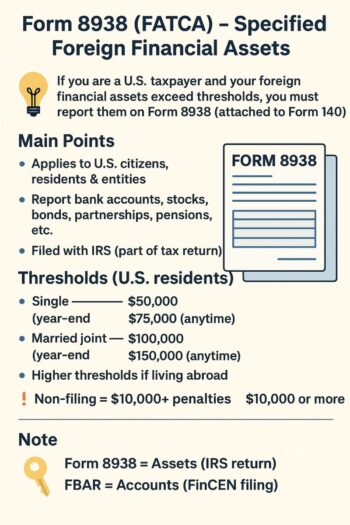
๐Ÿ’ก Form 8938 (FATCA) โ€“ Specified Foreign Financial Assets :- If you are a U.S. taxpayer and your foreign financial assets exceed certain thresholds, you must report them on Form 8938 (attached to your Form 1040). ๐Ÿ“Œ Main Points :- โ€ข Applies to U.S. citizens, residents & certain entities. โ€ข Report bank accounts, stocks, bonds, foreign partnerships, pensions, life insurance with cash value, etc. โ€ข File with IRS (part of your income tax return). โ€ข Thresholds (U.S. residents): โ€“ Single: > $50,000 (year-end) / $75,000 (anytime) โ€“ Married Filing Jointly: > $100,000 (year-end) / $150,000 (anytime) โ€ข Higher thresholds apply if living abroad. โ€ข Non-filing = $10,000+ penalties (can increase if not corrected). โœ… Example: Foreign Bank A = $40,000 Foreign Stocks = $90,000 ๐Ÿ‘‰ Total = $130,000 โ†’ Single filer โ†’ Form 8938 required. โœจ Easy-to-remember points: *FBAR โ‰  Form 8938 โ†’ Both may apply. *Form 8938 is about assets (attached to IRS return). *FBAR is about accounts (filed separately with FinCEN). ๐Ÿ”‘ Remember: Form 8938 = IRS tax compliance under FATCA, aimed at transparency of offshore wealth.

Form 8938 (FATCA) โ€“ Specified Foreign Financial Assets Read More ยป

FBAR vs Form 8938 โ€“ Whatโ€™s the Difference?

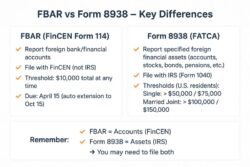
FBAR vs Form 8938 โ€“ Whatโ€™s the Difference? ๐Ÿ“Œ FBAR (FinCEN Form 114):- โ€ข Report foreign bank/financial accounts. โ€ข File online with FinCEN (not IRS). โ€ข Threshold: $10,000 total at any time in the year. โ€ข Due: April 15 (auto extension to Oct 15). ๐Ÿ“Œ Form 8938 (FATCA):- โ€ข Report specified foreign financial assets (bank accounts, stocks, bonds, partnerships, pensions, etc.). โ€ข File with IRS (attached to Form 1040). โ€ข Thresholds: โ€“ Single: > $50,000 (year-end) / $75,000 (anytime) โ€“ Married Joint: > $100,000 (year-end) / $150,000 (anytime). โœ… Example: Foreign Bank = $40,000 Foreign Stocks = $90,000 ๐Ÿ‘‰ Total = $130,000 (Single filer) โœ” FBAR required (accounts > $10k) โœ” Form 8938 required (assets > $75k) ๐Ÿ”‘ Remember:- *FBAR = Accounts (FinCEN) *Form 8938 = Assets (IRS) โžก Sometimes you must file both.

FBAR vs Form 8938 โ€“ Whatโ€™s the Difference? Read More ยป

Notable Changes for Tax Year 2025 (Income tax returns to be filed starting tax season 2026)

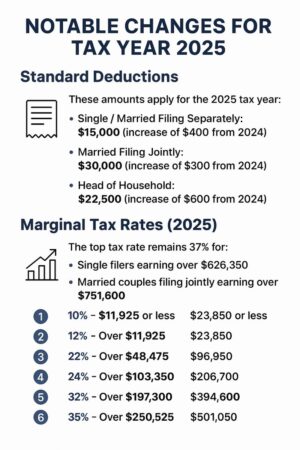
๐Ÿ’ก Notable Changes for Tax Year 2025 (Income tax returns to be filed starting tax season 2026) Standard deductions AND Marginal Tax rates:- These updates apply to income tax returns filed in 2026 (for the 2025 tax year) ๐Ÿงพ Standard Deductions: *Single / Married Filing Separately: $15,000 (increase of $400 from 2024) *Married Filing Jointly: $30,000 (increase of $800 from 2024) *Head of Household: $22,500 (increase of $600 from 2024) ๐Ÿ“Š Marginal Tax Rates (2025): The top tax rate remains 37% for: *Single filers earning over $626,350 *Married couples filing jointly earning over $751,600 Other rates and brackets: 1)ย 10% โ€“ $11,925 or less (single) / $23,850 or less (married joint) 2)ย 12% โ€“ Over $11,925 (single) / $23,850 (married joint) 3)ย 22% โ€“ Over $48,475 (single) / $96,950 (married joint) 4)ย 24% โ€“ Over $103,350 (single) / $206,700 (married joint) 5) ย 32% โ€“ Over $197,300 (single) / $394,600 (married joint) 6)ย 35% โ€“ Over $250,525 (single) / $501,050 (married joint)

Notable Changes for Tax Year 2025 (Income tax returns to be filed starting tax season 2026) Read More ยป

FBAR (FinCEN Form 114) โ€“ Foreign Bank Account Report

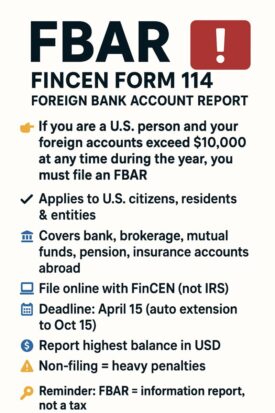
๐Ÿ’ก FBAR (FinCEN Form 114) โ€“ Foreign Bank Account Report :-   If you are a U.S. person and your total foreign bank/financial accounts exceed $10,000 at any time during the year, you must file an FBAR. ๐Ÿ“Œ Easy-to-understand points: *Applies to all U.S. citizens, residents, and entities (LLCs, Corps, Trusts). *Includes bank, brokerage, mutual funds, pension, insurance accounts outside the U.S. *File online with FinCEN (not IRS). *Deadline: April 15 (automatic extension to Oct 15). *Report the highest balance (converted to USD). *Non-filing = heavy penalties (even if no tax is due). โœ… Example: National Bank (Pakistan): $5,000 ICICI Bank (India): $5,001 ๐Ÿ‘‰ Total = $10,001 โ†’ FBAR filing required. ๐Ÿ”‘ Remember: FBAR is an information report, not a tax. The goal is transparency of offshore accounts.

FBAR (FinCEN Form 114) โ€“ Foreign Bank Account Report Read More ยป

Got Hit With a Tax Penalty Even Though You Paid? (Form 2210)

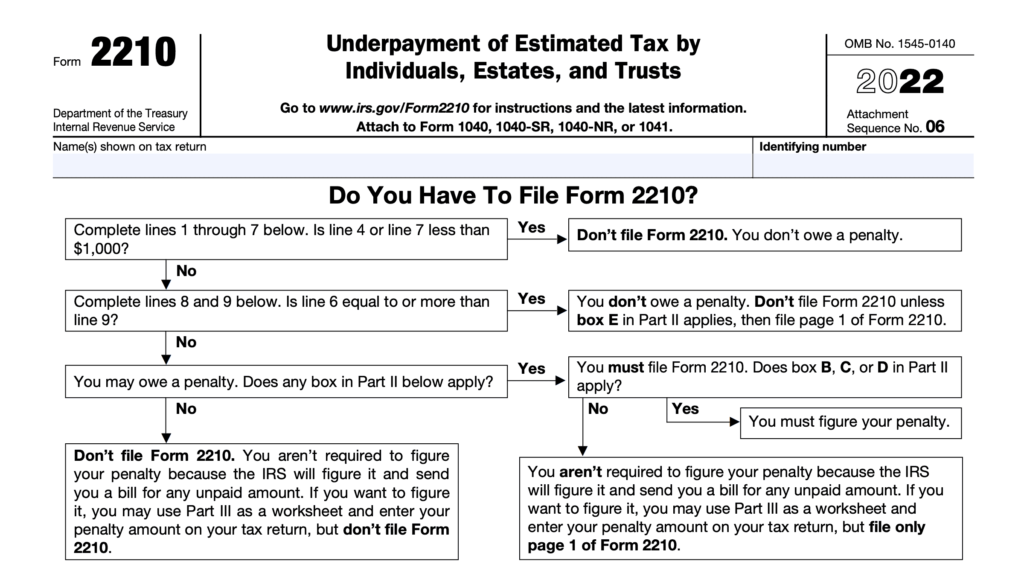
๐Ÿงพ Got Hit With a Tax Penalty Even Though You Paid? Read This. ๐ŸŽฏ It happens more often than youโ€™d think. You work hard, pay your taxes by year-end, and still get slapped with an IRS penalty.Why? Because the IRS wants you to pay as you earnโ€”not just at the end. But donโ€™t worryโ€”Form 2210 can help you fix that. ๐Ÿ’ก Whatโ€™s Form 2210 (In Plain English)? If you: Didnโ€™t pay enough estimated taxes throughout the year, or Made most of your money later in the year โ€ฆthe IRS might charge you a penaltyโ€”even if you paid everything in full by the deadline. Form 2210 lets you explain your situation and often helps reduce or remove the penalty. ๐Ÿ’ผ Real Story: A freelancer made $60,000 in 2024, but most of it came at the end of the year (Octโ€“Dec). Hereโ€™s how his tax payments looked: Q1: $300 Q2: $400 Q3: $500 Q4: $6,800 ๐Ÿ’ฅ The IRS said: โ€œThatโ€™s too little too late. You owe a penalty.โ€ But a friendly tax pro showed him Part IV of Form 2210, which allows you to show the IRS when you actually earned the income. โœ… He filed itโ€”and the IRS waived the penalty. Boom. Full refund. ๐Ÿ’ฌ Real Talk: โ€œPaying taxes isnโ€™t just about writing a checkโ€”itโ€™s about telling your income story the right way.โ€ If your income isnโ€™t consistent, especially as a freelancer, business owner, or gig workerโ€”Form 2210 can save you money. Donโ€™t ignore it. Use it smartly. You might be surprised what the IRS will understandโ€”if you just show them the full picture.

Got Hit With a Tax Penalty Even Though You Paid? (Form 2210) Read More ยป

HOW TO REGISTER A TRADEMARK IN THE USA

    1)ย ย ย ย WHAT IS TRADEMARK? A trademark serves as a means for individuals and businesses to distinguish their goods and services from others in the market. It can take the form of a brand name, logo, phrase, or word, and is a valuable asset that needs legal protection through intellectual property rights. In the United States, the registration and administration of trademarks are overseen by the US Patent and Trademark Office (USPTO). While federal registration through the USPTO is the primary avenue for trademark protection, individual states also offer their own trademark registration systems. State-level registrations typically provide limited protection within a specific geographical area. On the other hand, federal registration provides comprehensive protection across the entire United States, offering broader recognition and legal benefits.   2)ย ย ย ย WHO CAN APPLY FOR A TRADEMARK? In the United States, any individual or entity that meets the eligibility requirements can apply for a trademark. The bellow mentioned parties are eligible to apply for a trademark in the USA: 1. Individuals: Any person who uses a mark in connection with their goods or services may apply for a trademark. This includes individuals who operate businesses as sole proprietors or entrepreneurs. 2. Corporations and Companies: Business entities, such as corporations, limited liability companies (LLCs), partnerships, and other legally recognized organizations can apply for trademarks to protect their brands. 3. Foreign Entities: Foreign individuals or entities that use or intend to use a trademark in commerce within the United States can also apply for trademark registration. It’s worth noting that foreign applicants are required to have a U.S.-licensed attorney represent them in most cases. 4. Non-Profit Organizations: Non-profit organizations that use or plan to use a trademark in connection with their goods or services are eligible to apply for trademark registration. 5. Government Entities: Government agencies or departments can also apply for trademark registration if they use a mark to distinguish their goods or services. 3)ย ย ย ย WHAT CAN BE TRADEMARKED? In the United States, a wide range of elements can be trademarked to protect a brand’s identity and distinguish its goods or services from others. The following are examples of what can be trademarked: 1. Brand Names: A brand name, such as Nike or Coca-Cola, can be trademarked to provide exclusive rights to use that name in connection with specific goods or services. 2. Logos and Symbols: Unique logos, symbols, or graphic designs that represent a brand or its products can be trademarked. For example, the Apple logo or the Nike “swoosh” symbol. 3. Slogans and Taglines: Catchy slogans, memorable phrases, or taglines associated with a brand can be trademarked. Such as “A to Z” for Amazon or “Das Auto” for Volkswagen. 4. Product Packaging: Distinctive product packaging, such as the shape of a Coca-Cola bottle or the design of a Pringles can be trademarked to protect the unique visual elements that consumers associate with a particular brand. 5. Product Names: Names given to specific products or services can be trademarked. For instance, the name “iPad” is a registered trademark for Apple’s tablet device. 6. Sounds: Unique sounds or rings that are used to identify a brand, such as the Intel “bong” sound or the NBC chimes, can be trademarked. 7. Colors: In certain circumstances, specific colors can be trademarked when they are closely associated with a brand and have acquired distinctiveness, such as the Tiffany blue color. 8. Fragrances: Rare or distinctive scents used in connection with products such as perfumes or air fresheners can possibly be trademarked. Additionally, the element should not be commonly used to describe the goods or services or directly describe a characteristic or quality of the goods or services. Generic and descriptive elements typically do not qualify for trademark protection. 4)ย ย ย ย WHAT IS THE PROCEDURE FOR APPLYING FOR TRADEMARKS IN THE USA? The procedure for registering a trademark in the United States includes some steps. Below mentioned is an overview of the registration process: 1. Before filing an application, it is advisable to conduct a thorough trademark search to ensure that your desired mark is available and does not conflict with existing trademarks. This search can be performed independently using the USPTO’s trademark database or with the assistance of professional search firms. 2. Determine whether you will be filing based on the actual use of the mark in commerce or on the intent to use the mark in the future. This will depend on your specific circumstances and whether the mark is already in use at the time of filing. 3. Complete the Trademark Electronic Application System (TEAS) form, providing accurate information about the applicant, the mark itself and the goods or services associated with the mark. 4. File the trademark application electronically through the USPTO’s Trademark Electronic Application System (TEAS) and pay the required filing fee. The fee amount will depend on the filing basis and the number of classes of goods or services included in the application. 5. Once the application is submitted, it will be assigned to a trademark examiner at the USPTO. The examiner will review the application for compliance with legal requirements and assess potential conflicts with existing marks. If any issues or objections arise, they will be communicated through an Office Action. 6. If you receive an Office Action, you must respond within the specified timeframe, typically within six months, addressing any objections or issues raised by the examiner. If you do not respond then it may result in rejection of the application. 7. If the application is approved by the examiner, it will be published in the USPTO’s Official Gazette for a specified period, typically 30 days. During this time, third parties can oppose the registration if they believe it infringes on their existing rights. If no opposition is filed, the application proceeds to the next step. 8. If there are no successful oppositions, or if the application was based on intent to use and the mark has been used in commerce, the USPTO will issue a Notice of Allowance. You will need to submit
HOW TO REGISTER A TRADEMARK IN THE USA Read More ยป

๐™๐™ฃ๐™™๐™š๐™ง๐™จ๐™ฉ๐™–๐™ฃ๐™™๐™ž๐™ฃ๐™œ ๐™”๐™ค๐™ช๐™ง ๐™๐™ž๐™ก๐™ž๐™ฃ๐™œ ๐™Ž๐™ฉ๐™–๐™ฉ๐™ช๐™จ ๐™›๐™ค๐™ง ๐™๐™ค๐™ง๐™ข ๐Ÿญ๐Ÿฌ๐Ÿฐ๐Ÿฌ:

๐™๐™ฃ๐™™๐™š๐™ง๐™จ๐™ฉ๐™–๐™ฃ๐™™๐™ž๐™ฃ๐™œ ๐™”๐™ค๐™ช๐™ง ๐™๐™ž๐™ก๐™ž๐™ฃ๐™œ ๐™Ž๐™ฉ๐™–๐™ฉ๐™ช๐™จ ๐™›๐™ค๐™ง ๐™๐™ค๐™ง๐™ข ๐Ÿญ๐Ÿฌ๐Ÿฐ๐Ÿฌ: When it comes to filing your taxes, choosing the right filing status is crucial as it directly impacts your tax rate, deductions, and potential credits. The IRS offers five different filing statuses, each with its own requirements and benefits. In this post, Iโ€™ll break down each status in simple terms to help you determine which one applies to your situation and ensure you file your taxes in the most efficient way possible. ๐Ÿญ. ๐—ฆ๐—ถ๐—ป๐—ด๐—น๐—ฒ: ๐˜ž๐˜ฉ๐˜ฐ?: People who are not married, legally separated, or widowed before 2024. ๐˜›๐˜ข๐˜น ๐˜‰๐˜ฆ๐˜ฏ๐˜ฆ๐˜ง๐˜ช๐˜ต๐˜ด: Generally higher taxes compared to others. ๐˜‹๐˜ฆ๐˜ฑ๐˜ฆ๐˜ฏ๐˜ฅ๐˜ฆ๐˜ฏ๐˜ต๐˜ด: Can claim dependents, but it often results in higher tax. ๐˜’๐˜ฆ๐˜บ ๐˜—๐˜ฐ๐˜ช๐˜ฏ๐˜ต: For those who donโ€™t qualify for any other filing status. ๐Ÿฎ. ๐—›๐—ฒ๐—ฎ๐—ฑ ๐—ผ๐—ณ ๐—›๐—ผ๐˜‚๐˜€๐—ฒ๐—ต๐—ผ๐—น๐—ฑ (๐—›๐—ข๐—›): ๐˜ž๐˜ฉ๐˜ฐ?: Unmarried or considered unmarried, and you pay more than half the cost of keeping a home for a dependent (like a child). ๐˜›๐˜ข๐˜น ๐˜‰๐˜ฆ๐˜ฏ๐˜ฆ๐˜ง๐˜ช๐˜ต๐˜ด: Lower taxes than Single, with higher deductions. ๐˜‹๐˜ฆ๐˜ฑ๐˜ฆ๐˜ฏ๐˜ฅ๐˜ฆ๐˜ฏ๐˜ต๐˜ด: Must have a dependent living with you (e.g., child or parent). ๐˜’๐˜ฆ๐˜บ ๐˜—๐˜ฐ๐˜ช๐˜ฏ๐˜ต: You must meet specific rules to qualify, like living apart from a spouse. ๐Ÿฏ. ๐— ๐—ฎ๐—ฟ๐—ฟ๐—ถ๐—ฒ๐—ฑ ๐—™๐—ถ๐—น๐—ถ๐—ป๐—ด ๐—๐—ผ๐—ถ๐—ป๐˜๐—น๐˜† (๐— ๐—™๐—): ๐˜ž๐˜ฉ๐˜ฐ?: Married couples who file together, combining their incomes and deductions. ๐˜›๐˜ข๐˜น ๐˜‰๐˜ฆ๐˜ฏ๐˜ฆ๐˜ง๐˜ช๐˜ต๐˜ด: Lowest tax rates and highest deductions. ๐˜‹๐˜ฆ๐˜ฑ๐˜ฆ๐˜ฏ๐˜ฅ๐˜ฆ๐˜ฏ๐˜ต๐˜ด: Both spouses can claim dependents together. ๐˜’๐˜ฆ๐˜บ ๐˜—๐˜ฐ๐˜ช๐˜ฏ๐˜ต: Both spouses share responsibility for taxes, but it offers significant savings. ๐Ÿฐ. ๐— ๐—ฎ๐—ฟ๐—ฟ๐—ถ๐—ฒ๐—ฑ ๐—™๐—ถ๐—น๐—ถ๐—ป๐—ด ๐—ฆ๐—ฒ๐—ฝ๐—ฎ๐—ฟ๐—ฎ๐˜๐—ฒ๐—น๐˜† (๐— ๐—™๐—ฆ): ๐˜ž๐˜ฉ๐˜ฐ?: Married couples who choose to file separately. ๐˜›๐˜ข๐˜น ๐˜‰๐˜ฆ๐˜ฏ๐˜ฆ๐˜ง๐˜ช๐˜ต๐˜ด: Higher taxes and fewer deductions. ๐˜‹๐˜ฆ๐˜ฑ๐˜ฆ๐˜ฏ๐˜ฅ๐˜ฆ๐˜ฏ๐˜ต๐˜ด: Can claim dependents, but many tax benefits are limited. ๐˜’๐˜ฆ๐˜บ ๐˜—๐˜ฐ๐˜ช๐˜ฏ๐˜ต: This is usually less beneficial tax-wise but may be useful if you want to avoid sharing tax responsibility with your spouse. ๐Ÿฑ. ๐—ค๐˜‚๐—ฎ๐—น๐—ถ๐—ณ๐˜†๐—ถ๐—ป๐—ด ๐—ฆ๐˜‚๐—ฟ๐˜ƒ๐—ถ๐˜ƒ๐—ถ๐—ป๐—ด ๐—ฆ๐—ฝ๐—ผ๐˜‚๐˜€๐—ฒ (๐—ค๐—ฆ๐—ฆ): ๐˜ž๐˜ฉ๐˜ฐ?: Widowed in 2022 or 2023, with a dependent child living with you, and not remarried by the end of 2024. ๐˜›๐˜ข๐˜น ๐˜‰๐˜ฆ๐˜ฏ๐˜ฆ๐˜ง๐˜ช๐˜ต๐˜ด: Same tax benefits as Married Filing Jointly. ๐˜‹๐˜ฆ๐˜ฑ๐˜ฆ๐˜ฏ๐˜ฅ๐˜ฆ๐˜ฏ๐˜ต๐˜ด: Must have a dependent child living with you. ๐˜’๐˜ฆ๐˜บ ๐˜—๐˜ฐ๐˜ช๐˜ฏ๐˜ต: You can file as if youโ€™re still married for up to two years after your spouseโ€™s death (if no remarriage).

๐™๐™ฃ๐™™๐™š๐™ง๐™จ๐™ฉ๐™–๐™ฃ๐™™๐™ž๐™ฃ๐™œ ๐™”๐™ค๐™ช๐™ง ๐™๐™ž๐™ก๐™ž๐™ฃ๐™œ ๐™Ž๐™ฉ๐™–๐™ฉ๐™ช๐™จ ๐™›๐™ค๐™ง ๐™๐™ค๐™ง๐™ข ๐Ÿญ๐Ÿฌ๐Ÿฐ๐Ÿฌ: Read More ยป

๐“๐ก๐ž ๐ˆ๐ฆ๐ฉ๐จ๐ซ๐ญ๐š๐ง๐œ๐ž ๐จ๐Ÿ ๐€๐œ๐œ๐ฎ๐ซ๐š๐œ๐ฒ ๐ข๐ง ๐“๐š๐ฑ ๐๐ซ๐ž๐ฉ๐š๐ซ๐š๐ญ๐ข๐จ๐ง: ๐€ ๐‹๐ž๐ฌ๐ฌ๐จ๐ง ๐Ÿ๐ซ๐จ๐ฆ ๐š ๐Ÿ๐ŸŽ๐Ÿ—๐Ÿ—-๐‘ ๐…๐ข๐ฅ๐ข๐ง๐  ๐„๐ซ๐ซ๐จ๐ซ

In my recent review of a tax return, I came across an input error that highlights the critical importance of precision in tax preparation. Here’s the scenario: A client received $๐Ÿ“,๐ŸŽ๐ŸŽ๐ŸŽ in annuities, reported as Gross Distribution (๐๐จ๐ฑ ๐Ÿ) on Form 1099-R. The distribution was a ๐๐จ๐ซ๐ฆ๐š๐ฅ ๐ƒ๐ข๐ฌ๐ญ๐ซ๐ข๐›๐ฎ๐ญ๐ข๐จ๐ง from their Pension account. However, the tax preparer mistakenly checked the box for ๐ˆ๐‘๐€/๐’๐ˆ๐Œ๐๐‹๐„/๐’๐„๐ while filing. This seemingly minor error led to significant tax implications. By selecting the IRA/SIMPLE/SEP checkbox, the $๐Ÿ“,๐ŸŽ๐ŸŽ๐ŸŽ was incorrectly treated as a taxable IRA distribution, resulting in an unnecessary increase in taxable income reported on ๐‹๐ข๐ง๐ž ๐Ÿ’๐› ๐จ๐Ÿ ๐…๐จ๐ซ๐ฆ ๐Ÿ๐ŸŽ๐Ÿ’๐ŸŽ. The client, unfortunately, ended up with a higher tax liability. Upon review, I cross-verified the prior yearโ€™s 1099-R and found that this error could have been avoided with careful attention to detail during data input. ๐Š๐ž๐ฒ ๐“๐š๐ค๐ž๐š๐ฐ๐š๐ฒ๐ฌ: ๐“๐ก๐จ๐ซ๐จ๐ฎ๐ ๐ก ๐‘๐ž๐ฏ๐ข๐ž๐ฐ: Always cross-check the information entered against the source documents to avoid misclassifications. ๐”๐ง๐๐ž๐ซ๐ฌ๐ญ๐š๐ง๐๐ข๐ง๐  ๐“๐š๐ฑ ๐…๐จ๐ซ๐ฆ๐ฌ: Familiarize yourself with the nuances of forms like 1099-R, especially the implications of checking certain boxes. ๐‚๐จ๐ง๐ญ๐ข๐ง๐ฎ๐จ๐ฎ๐ฌ ๐‹๐ž๐š๐ซ๐ง๐ข๐ง๐ :The tax code is complex; staying updated and vigilant is crucial to serving clients effectively. ๐Œ๐จ๐ซ๐š๐ฅ ๐Ÿ‘‰ A small oversight can lead to significant consequences for clients, ๐€๐ฅ๐ฐ๐š๐ฒ๐ฌ ๐ ๐ข๐ฏ๐ž ๐Ÿ’๐ŸŽ-๐Ÿ’๐Ÿ“ ๐ฆ๐ข๐ง๐ฎ๐ญ๐ž๐ฌ ๐ญ๐จ ๐ญ๐ก๐ž ๐ฉ๐ซ๐ข๐จ๐ซ ๐ฒ๐ž๐š๐ซ’๐ฌ ๐ซ๐ž๐ญ๐ฎ๐ซ๐ง ๐œ๐ก๐ž๐œ๐ค ๐š๐ง๐ ๐ง๐จ๐ญ๐ž ๐ญ๐ก๐ž ๐ฆ๐จ๐ฌ๐ญ ๐ก๐ข๐ ๐ก๐ฅ๐ข๐ ๐ก๐ญ๐ž๐ ๐ข๐ญ๐ž๐ฆ๐ฌ. Both financially and in terms of trust. As tax professionals, we hold a responsibility to ensure accuracy and protect our clients from avoidable tax burdens. Letโ€™s strive for excellence in our work!

๐“๐ก๐ž ๐ˆ๐ฆ๐ฉ๐จ๐ซ๐ญ๐š๐ง๐œ๐ž ๐จ๐Ÿ ๐€๐œ๐œ๐ฎ๐ซ๐š๐œ๐ฒ ๐ข๐ง ๐“๐š๐ฑ ๐๐ซ๐ž๐ฉ๐š๐ซ๐š๐ญ๐ข๐จ๐ง: ๐€ ๐‹๐ž๐ฌ๐ฌ๐จ๐ง ๐Ÿ๐ซ๐จ๐ฆ ๐š ๐Ÿ๐ŸŽ๐Ÿ—๐Ÿ—-๐‘ ๐…๐ข๐ฅ๐ข๐ง๐  ๐„๐ซ๐ซ๐จ๐ซ Read More ยป