
1040 -Individual Tax

𝗠𝗼𝘀𝘁 𝗹𝗮𝗻𝗱𝗹𝗼𝗿𝗱𝘀 𝗺𝗶𝘀𝘀 𝘁𝗵𝗶𝘀 𝘀𝗺𝗮𝗹𝗹 𝗦𝗰𝗵𝗲𝗱𝘂𝗹𝗲 𝗘 𝗱𝗲𝘁𝗮𝗶𝗹 & 𝗶𝘁 𝗰𝗮𝗻 𝗰𝗼𝘀𝘁 𝘁𝗵𝗼𝘂𝘀𝗮𝗻𝗱𝘀
If you own rental property and report it on Schedule E, here’s something that slips under the radar for many taxpayers — and even some preparers. On Schedule E, you don’t just enter your rental income and expenses. One tiny detail can change the tax impact completely: 𝘄𝗵𝗲𝘁𝗵𝗲𝗿 𝘆𝗼𝘂𝗿 𝗿𝗲𝗻𝘁𝗮𝗹 𝗮𝗰𝘁𝗶𝘃𝗶𝘁𝘆 𝗶𝘀 𝗽𝗮𝘀𝘀𝗶𝘃𝗲 𝗼𝗿 𝗻𝗼𝗻-𝗽𝗮𝘀𝘀𝗶𝘃𝗲. 𝗪𝗵𝘆 𝗶𝘁 𝗺𝗮𝘁𝘁𝗲𝗿𝘀? • If it’s passive, your losses may be limited to $25,000 (and even that phases out as your income grows). • If it’s non-passive, those losses could offset other types of income without the cap. 𝗛𝗲𝗿𝗲’𝘀 𝘁𝗵𝗲 𝗸𝗶𝗰𝗸𝗲𝗿 — A rental can be non-passive if you qualify as a Real Estate Professional and materially participate. But the IRS rules for this are strict: • 𝗠𝗼𝗿𝗲 𝘁𝗵𝗮𝗻 𝟳𝟱𝟬 𝗵𝗼𝘂𝗿𝘀 𝗼𝗳 𝗿𝗲𝗮𝗹 𝗲𝘀𝘁𝗮𝘁𝗲 𝗮𝗰𝘁𝗶𝘃𝗶𝘁𝗶𝗲𝘀 𝗶𝗻 𝘁𝗵𝗲 𝘆𝗲𝗮𝗿 • 𝗠𝗼𝗿𝗲 𝘁𝗵𝗮𝗻 𝗵𝗮𝗹𝗳 𝗼𝗳 𝘆𝗼𝘂𝗿 𝘁𝗼𝘁𝗮𝗹 𝘄𝗼𝗿𝗸𝗶𝗻𝗴 𝗵𝗼𝘂𝗿𝘀 𝗶𝗻 𝗿𝗲𝗮𝗹 𝗲𝘀𝘁𝗮𝘁𝗲 • 𝗞𝗲𝗲𝗽𝗶𝗻𝗴 𝗱𝗲𝘁𝗮𝗶𝗹𝗲𝗱 𝗹𝗼𝗴𝘀 𝘁𝗼 𝗽𝗿𝗼𝘃𝗲 𝗶𝘁 Failing to tick the correct box or meet the test means your loss deduction could be stuck in passive activity limbo for years. I’ve seen cases where taxpayers lost the chance to offset six figures of other income — simply because this detail wasn’t addressed. If you have rental properties, this one checkbox on Schedule E can make all the difference. 𝗛𝗮𝘃𝗲 𝘆𝗼𝘂 𝗰𝗵𝗲𝗰𝗸𝗲𝗱 𝘆𝗼𝘂𝗿𝘀?
𝗠𝗼𝘀𝘁 𝗹𝗮𝗻𝗱𝗹𝗼𝗿𝗱𝘀 𝗺𝗶𝘀𝘀 𝘁𝗵𝗶𝘀 𝘀𝗺𝗮𝗹𝗹 𝗦𝗰𝗵𝗲𝗱𝘂𝗹𝗲 𝗘 𝗱𝗲𝘁𝗮𝗶𝗹 & 𝗶𝘁 𝗰𝗮𝗻 𝗰𝗼𝘀𝘁 𝘁𝗵𝗼𝘂𝘀𝗮𝗻𝗱𝘀 Read More »
1065 Filing Tip: Don’t Misread the “Small Partnership” Exception
If you’re preparing partnership tax returns (Form 1065), there’s one question that trips up many preparers — Schedule B, Question 4.This question asks whether the partnership qualifies for an exception that allows you to skip some forms (like M-1, M-2, and B-1).Sounds simple, right? But here’s where most people get it wrong :point_down:To answer “Yes” to this question, ALL of these must be true:The partnership’s total receipts are less than $250,000The assets at year-end are less than $1 millionYou gave all K-1s to partners on timeThe partnership isn’t required to file Schedule M-3 Here’s the common mistake:People assume that if the partnership has exactly $250,000 in receipts or exactly $1 million in assets, they qualify.They don’t.The IRS uses “less than” — not “less than or equal to.”So:$250,000 in receipts = :x: Doesn’t qualify$1,000,000 in assets = :x: Doesn’t qualifyIf you answer “Yes” when you shouldn’t, the return may be incomplete — and the IRS could catch it. ✅Best practice: Before answering that question:Double-check the total receiptsLook at the balance sheet totalsConfirm all K-1s were provided on timeIf either threshold is met or exceeded, answer “No” — and make sure Schedules M-1 and M-2 are included. It’s a small checkbox — but getting it wrong can lead to big compliance issues.
1065 Filing Tip: Don’t Misread the “Small Partnership” Exception Read More »
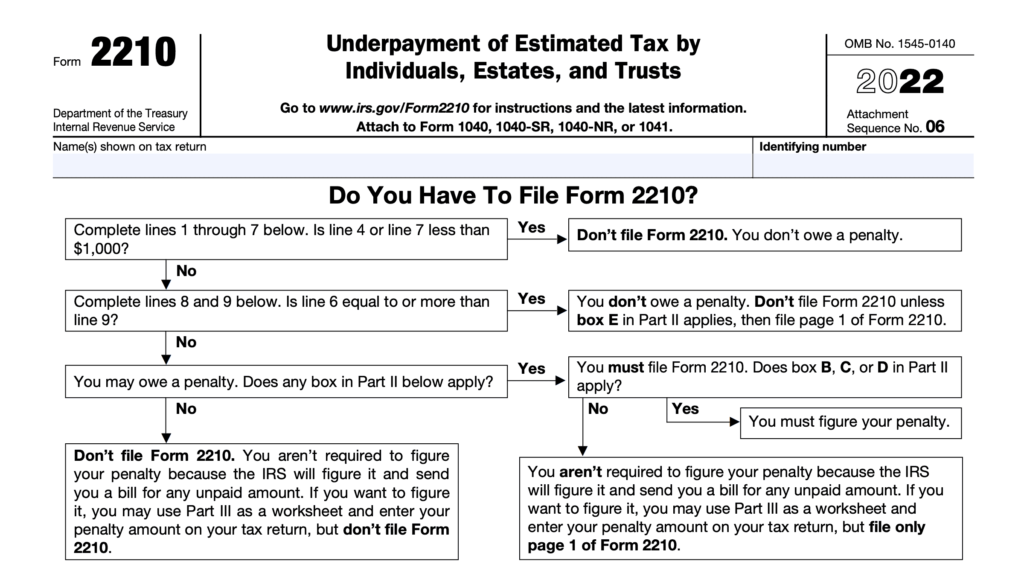
Got Hit With a Tax Penalty Even Though You Paid? (Form 2210)
🧾 Got Hit With a Tax Penalty Even Though You Paid? Read This. 🎯 It happens more often than you’d think. You work hard, pay your taxes by year-end, and still get slapped with an IRS penalty.Why? Because the IRS wants you to pay as you earn—not just at the end. But don’t worry—Form 2210 can help you fix that. 💡 What’s Form 2210 (In Plain English)? If you: Didn’t pay enough estimated taxes throughout the year, or Made most of your money later in the year …the IRS might charge you a penalty—even if you paid everything in full by the deadline. Form 2210 lets you explain your situation and often helps reduce or remove the penalty. 💼 Real Story: A freelancer made $60,000 in 2024, but most of it came at the end of the year (Oct–Dec). Here’s how his tax payments looked: Q1: $300 Q2: $400 Q3: $500 Q4: $6,800 💥 The IRS said: “That’s too little too late. You owe a penalty.” But a friendly tax pro showed him Part IV of Form 2210, which allows you to show the IRS when you actually earned the income. ✅ He filed it—and the IRS waived the penalty. Boom. Full refund. 💬 Real Talk: “Paying taxes isn’t just about writing a check—it’s about telling your income story the right way.” If your income isn’t consistent, especially as a freelancer, business owner, or gig worker—Form 2210 can save you money. Don’t ignore it. Use it smartly. You might be surprised what the IRS will understand—if you just show them the full picture.
Got Hit With a Tax Penalty Even Though You Paid? (Form 2210) Read More »

Qualified Business Income Deduction
Qualified Business Income (QBI) was introduced as part of the Tax Cuts and Jobs Act (TCJA), which was signed into law on December 22, 2017 and will remain valid till the end of 2025 unless extended or modified through legislation. TCJA included several provisions that benefited larger corporations and small businesses alike. It lowered the corporate tax rate from a maximum of 35% to 21% & helped small businesses in shape of QBI. Non-corporate taxpayers are permitted to claim a 20% deduction for income derived through qualified trades or businesses. The deduction is available to individuals who operate qualified businesses as sole proprietorships or through pass-through entities, including partnerships, LLCs and Subchapter S corporations. The QBI deduction is taken “Below the line” rather than in computing adjusted taxable income “above the line”. The deduction may thus be claimed whether the taxpayer itemizes deductions or claims the standard deduction Who qualifies for QBI: The QBI deduction is claimed with reference to the qualified business income from each specified trade or business. QBI is pivotal in determining the deduction available under Section 199A of the Internal Revenue Code, which allows eligible taxpayers to deduct up to 20% of their QBI. Wage and Qualified Property Limitation (WQP): The WQP limitation comes into play for taxpayers with QBI, particularly for high-income earners. This limitation is designed to phase out or limit the QBI deduction based on the amount of W-2 wages paid and the value of qualified property held by the business. Why WQP is important: The WQP limitation helps prevent high-income individuals from abusing the QBI deduction by ensuring that only those with substantial investments in their businesses can benefit fully. It incentivizes businesses to hire employees and invest in property, as the deduction is tied to wages and property. The phase in range for the most recent years is; For 2024, the threshold amount is USD 383,900 for married individuals who file a joint tax return, USD 191,950 for all other individuals
Qualified Business Income Deduction Read More »

Salaried Class Taxation In USA
US Federal income tax is applied on income of salaried individuals based on gross income less allowable deductions. The tax is initially collected as withholding from employees and deposited with the IRS by the employers each month. In computing the taxable income there are 2 types of deductions that are allowed to the employees. “Above the Line deductions” i-e Gross income less certain specified deductions to reach at Adjusted Gross income (AGI) and “Below the line deductions” i-e AGI less standard deductions/itemized deductions. 1. Health savings account contributions (HAS): Contributions to HSA is deductible if individual is eligible 2. Commuting expenses: Specifically for those employees who need to carry tools or equipment to the work place & incurred additional commuting cost for transportation. This additional cost is deductible. 3. Automobile expenses: Expense incurred on Personal vehicle used for business purposes are deductible. There are 2 ways to calculate the deduction amount. a) Actual basis: Actual expenses on running & maintaining the vehicle attributable to business use b) Mileage rate: IRS publishes a standard business mileage rate each year for business miles driven. Normally this method is used. (67cents per mile for TY 2024) 4. Travel expense: Reasonable and necessary travel expenses are deductible for business purposes. The primary intention of travel must be business. Meals are 50% deductible while on business travel. (very detailed rules available for interested people). 5. Foreign travel: Not deductible unless it is purely for business purposes. 6. Entertainment, meals and business gifts: 50% deductible subject to certain conditions and restrictions 7. Home office expense: Subject to certain conditions these expense are deductible. In case of employees, it must be demonstrated that home office use is for the convenience of employer 8. Dues and subscriptions: Dues and other payments to labor unions, trade associations and professional organizations are fully deductible. 9. Education expenses: These are deductible subject to certain conditions and restrictions. 10. Interest on education loans: Interest paid on qualified education loans is deductible Above all are itemized deductions and employee has option either to claim total of itemized deductions or standard deductions whichever is more beneficial. Standard deduction amounts are adjusted each year for inflation & vary based on the filing status of the taxpayer. For 2024, the following are standard deduction amounts Single: $14,600 Married Filing Jointly: $29,200 Married Filing Separately: $14,600 Head of Household: $21,900 Above is a basic idea about deductions available to salaried/self employed persons and list is not exhaustive, may be more or less depending on case to case basis.
Salaried Class Taxation In USA Read More »

Understanding Short Term Rental and Real Estate Professional Status
Short-term rentals, such as those listed on 𝐀𝐢𝐫𝐛𝐧𝐛 𝐚𝐧𝐝 𝐕𝐑𝐁𝐎, are often misunderstood when it comes to tax implications—especially in relation to real estate professional status. Let’s break it down clearly: 𝐔𝐧𝐝𝐞𝐫 𝐓𝐫𝐞𝐚𝐬𝐮𝐫𝐲 𝐑𝐞𝐠𝐮𝐥𝐚𝐭𝐢𝐨𝐧 𝐒𝐞𝐜𝐭𝐢𝐨𝐧 𝟏.𝟒𝟔𝟗-𝟏𝐓(𝐞)(𝟑) there’s an important exception: if the average period of customer use for a property is 𝐬𝐞𝐯𝐞𝐧 𝐝𝐚𝐲𝐬 𝐨𝐫 𝐥𝐞𝐬𝐬, the activity is not considered a 𝐒𝐞𝐜𝐭𝐢𝐨𝐧 𝟒𝟔𝟗 𝐫𝐞𝐧𝐭𝐚𝐥 𝐚𝐜𝐭𝐢𝐯𝐢𝐭𝐲. This means that most short-term rental properties (like those on Airbnb and VRBO) are not classified as rental activities under Section 469 of the Internal Revenue Code. 𝐖𝐡𝐲 𝐝𝐨𝐞𝐬 𝐭𝐡𝐢𝐬 𝐦𝐚𝐭𝐭𝐞𝐫? It means you do not need to qualify as a real estate professional under IRC 𝐒𝐞𝐜. 𝟒𝟔𝟗(𝐜)(𝟕)(𝐁) to claim losses from short-term rentals as non-passive. You just need to show that you materially participated in the activity during the tax year, and your rental losses will be non-passive. This is a potential avenue for individuals with demanding jobs or business roles who cannot meet the real estate professional requirements but still want to deduct rental losses. 𝐁𝐮𝐭 𝐡𝐞𝐫𝐞’𝐬 𝐚 𝐤𝐞𝐲 𝐪𝐮𝐞𝐬𝐭𝐢𝐨𝐧: 𝐃𝐨 𝐡𝐨𝐮𝐫𝐬 𝐬𝐩𝐞𝐧𝐭 𝐨𝐧 𝐲𝐨𝐮𝐫 𝐬𝐡𝐨𝐫𝐭-𝐭𝐞𝐫𝐦 𝐫𝐞𝐧𝐭𝐚𝐥 𝐜𝐨𝐮𝐧𝐭 𝐭𝐨𝐰𝐚𝐫𝐝 𝐫𝐞𝐚𝐥 𝐞𝐬𝐭𝐚𝐭𝐞 𝐩𝐫𝐨𝐟𝐞𝐬𝐬𝐢𝐨𝐧𝐚𝐥 𝐬𝐭𝐚𝐭𝐮𝐬? 𝐓𝐰𝐨 𝐓𝐚𝐱 𝐂𝐨𝐮𝐫𝐭 𝐜𝐚𝐬𝐞𝐬 𝐬𝐚𝐲 𝐧𝐨. 𝐈𝐧 𝐭𝐡𝐞 𝐜𝐚𝐬𝐞𝐬 𝐨𝐟 𝐁𝐚𝐢𝐥𝐞𝐲 𝐯. 𝐂𝐨𝐦𝐦𝐢𝐬𝐬𝐢𝐨𝐧𝐞𝐫 (𝐓.𝐂. 𝐌𝐞𝐦𝐨 𝟐𝟎𝟎𝟏-𝟐𝟗𝟔) 𝐚𝐧𝐝 𝐓𝐨𝐝𝐝 𝐚𝐧𝐝 𝐏𝐚𝐦𝐞𝐥𝐚 𝐁𝐚𝐢𝐥𝐞𝐲 𝐯. 𝐂𝐨𝐦𝐦𝐢𝐬𝐬𝐢𝐨𝐧𝐞𝐫 (𝐓.𝐂. 𝐒𝐮𝐦𝐦𝐚𝐫𝐲 𝐎𝐩𝐢𝐧𝐢𝐨𝐧 𝟐𝟎𝟏𝟏-𝟐𝟐) the court ruled that taxpayers with short-term and long-term rentals could not aggregate the two types of properties for purposes of qualifying as a real estate professional. The logic here is that short-term rentals do not qualify as “𝐫𝐞𝐧𝐭𝐚𝐥 𝐚𝐜𝐭𝐢𝐯𝐢𝐭𝐢𝐞𝐬,” and therefore cannot count toward real estate professional status. 𝐎𝐧𝐞 𝐢𝐦𝐩𝐨𝐫𝐭𝐚𝐧𝐭 𝐩𝐨𝐢𝐧𝐭 𝐡𝐞𝐫𝐞: Owning a short-term rental doesn’t automatically mean you have a 𝐒𝐜𝐡𝐞𝐝𝐮𝐥𝐞 𝐂 business subject to self-employment tax. If you don’t provide substantial services to the tenant during their stay, it’s likely a 𝐒𝐜𝐡𝐞𝐝𝐮𝐥𝐞 𝐄 𝐚𝐜𝐭𝐢𝐯𝐢𝐭𝐲, not a Schedule C business. So, In real estate investments, short-term rentals offer a great opportunity to deduct rental losses as non-passive—without needing to qualify as a real estate professional.
Understanding Short Term Rental and Real Estate Professional Status Read More »
Form 8621: A Must-Know for U.S. Taxpayers with Foreign Investments
If you’re a U.S. taxpayer investing abroad, Form 8621 might be on your radar. It’s used to report income, distributions, or even ownership in Passive Foreign Investment Companies (PFICs) — often foreign mutual funds or similar entities. Here’s a quick breakdown: 🔹 Who Needs to File? If you own shares in a PFIC (directly or indirectly) or need to make an election (like QEF or Mark-to-Market). 🔹 Why Does It Matter? Non-compliance = penalties! IRS audits can extend indefinitely if Form 8621 isn’t filed. 🔹 PFIC Taxes in Action – Let’s Talk Friends Style! Imagine Chandler invests in a foreign mutual fund, thinking, “Could I BE any more diversified?” But he forgets to file Form 8621. Suddenly, the IRS comes knocking, and Chandler’s stuck with higher taxes and penalties. Meanwhile, Ross (the nerd he is ) consults a tax expert and makes a QEF election. He reports everything smoothly and keeps the IRS happy. Rachel’s just confused, saying, “What’s a PFIC?” while Joey simply asks, “Is that something I can eat?” ⚠️ Complexity Alert: PFIC rules are notoriously tricky, but ignoring them isn’t an option. Plan ahead and consult a professional. 💡 Pro Tip: Early planning saves time and money. Don’t let PFIC taxation surprise you!
Form 8621: A Must-Know for U.S. Taxpayers with Foreign Investments Read More »
𝙐𝙣𝙙𝙚𝙧𝙨𝙩𝙖𝙣𝙙𝙞𝙣𝙜 𝙔𝙤𝙪𝙧 𝙁𝙞𝙡𝙞𝙣𝙜 𝙎𝙩𝙖𝙩𝙪𝙨 𝙛𝙤𝙧 𝙁𝙤𝙧𝙢 𝟭𝟬𝟰𝟬:
𝙐𝙣𝙙𝙚𝙧𝙨𝙩𝙖𝙣𝙙𝙞𝙣𝙜 𝙔𝙤𝙪𝙧 𝙁𝙞𝙡𝙞𝙣𝙜 𝙎𝙩𝙖𝙩𝙪𝙨 𝙛𝙤𝙧 𝙁𝙤𝙧𝙢 𝟭𝟬𝟰𝟬: When it comes to filing your taxes, choosing the right filing status is crucial as it directly impacts your tax rate, deductions, and potential credits. The IRS offers five different filing statuses, each with its own requirements and benefits. In this post, I’ll break down each status in simple terms to help you determine which one applies to your situation and ensure you file your taxes in the most efficient way possible. 𝟭. 𝗦𝗶𝗻𝗴𝗹𝗲: 𝘞𝘩𝘰?: People who are not married, legally separated, or widowed before 2024. 𝘛𝘢𝘹 𝘉𝘦𝘯𝘦𝘧𝘪𝘵𝘴: Generally higher taxes compared to others. 𝘋𝘦𝘱𝘦𝘯𝘥𝘦𝘯𝘵𝘴: Can claim dependents, but it often results in higher tax. 𝘒𝘦𝘺 𝘗𝘰𝘪𝘯𝘵: For those who don’t qualify for any other filing status. 𝟮. 𝗛𝗲𝗮𝗱 𝗼𝗳 𝗛𝗼𝘂𝘀𝗲𝗵𝗼𝗹𝗱 (𝗛𝗢𝗛): 𝘞𝘩𝘰?: Unmarried or considered unmarried, and you pay more than half the cost of keeping a home for a dependent (like a child). 𝘛𝘢𝘹 𝘉𝘦𝘯𝘦𝘧𝘪𝘵𝘴: Lower taxes than Single, with higher deductions. 𝘋𝘦𝘱𝘦𝘯𝘥𝘦𝘯𝘵𝘴: Must have a dependent living with you (e.g., child or parent). 𝘒𝘦𝘺 𝘗𝘰𝘪𝘯𝘵: You must meet specific rules to qualify, like living apart from a spouse. 𝟯. 𝗠𝗮𝗿𝗿𝗶𝗲𝗱 𝗙𝗶𝗹𝗶𝗻𝗴 𝗝𝗼𝗶𝗻𝘁𝗹𝘆 (𝗠𝗙𝗝): 𝘞𝘩𝘰?: Married couples who file together, combining their incomes and deductions. 𝘛𝘢𝘹 𝘉𝘦𝘯𝘦𝘧𝘪𝘵𝘴: Lowest tax rates and highest deductions. 𝘋𝘦𝘱𝘦𝘯𝘥𝘦𝘯𝘵𝘴: Both spouses can claim dependents together. 𝘒𝘦𝘺 𝘗𝘰𝘪𝘯𝘵: Both spouses share responsibility for taxes, but it offers significant savings. 𝟰. 𝗠𝗮𝗿𝗿𝗶𝗲𝗱 𝗙𝗶𝗹𝗶𝗻𝗴 𝗦𝗲𝗽𝗮𝗿𝗮𝘁𝗲𝗹𝘆 (𝗠𝗙𝗦): 𝘞𝘩𝘰?: Married couples who choose to file separately. 𝘛𝘢𝘹 𝘉𝘦𝘯𝘦𝘧𝘪𝘵𝘴: Higher taxes and fewer deductions. 𝘋𝘦𝘱𝘦𝘯𝘥𝘦𝘯𝘵𝘴: Can claim dependents, but many tax benefits are limited. 𝘒𝘦𝘺 𝘗𝘰𝘪𝘯𝘵: This is usually less beneficial tax-wise but may be useful if you want to avoid sharing tax responsibility with your spouse. 𝟱. 𝗤𝘂𝗮𝗹𝗶𝗳𝘆𝗶𝗻𝗴 𝗦𝘂𝗿𝘃𝗶𝘃𝗶𝗻𝗴 𝗦𝗽𝗼𝘂𝘀𝗲 (𝗤𝗦𝗦): 𝘞𝘩𝘰?: Widowed in 2022 or 2023, with a dependent child living with you, and not remarried by the end of 2024. 𝘛𝘢𝘹 𝘉𝘦𝘯𝘦𝘧𝘪𝘵𝘴: Same tax benefits as Married Filing Jointly. 𝘋𝘦𝘱𝘦𝘯𝘥𝘦𝘯𝘵𝘴: Must have a dependent child living with you. 𝘒𝘦𝘺 𝘗𝘰𝘪𝘯𝘵: You can file as if you’re still married for up to two years after your spouse’s death (if no remarriage).
𝙐𝙣𝙙𝙚𝙧𝙨𝙩𝙖𝙣𝙙𝙞𝙣𝙜 𝙔𝙤𝙪𝙧 𝙁𝙞𝙡𝙞𝙣𝙜 𝙎𝙩𝙖𝙩𝙪𝙨 𝙛𝙤𝙧 𝙁𝙤𝙧𝙢 𝟭𝟬𝟰𝟬: Read More »

The new tax season coming up
The new tax season coming up and the number of NRAs increasing every year. 𝗟𝗲𝘁𝘀 𝗹𝗲𝗮𝗿𝗻 𝗮𝗹𝗹 𝗮𝗯𝗼𝘂𝘁 𝗜𝗧𝗜𝗡 𝘁𝗼𝗱𝗮𝘆- An Individual Taxpayer Identification Number (ITIN) is a nine-digit number issued by the Internal Revenue Service (IRS) to individuals who are required to have a taxpayer identification number but are not eligible for a Social Security Number (SSN). ITINs are used for tax reporting purposes and are primarily issued to non-resident aliens, their spouses, and dependents who do not qualify for an SSN. 𝗣𝘂𝗿𝗽𝗼𝘀𝗲 𝗼𝗳 𝗜𝗧𝗜𝗡: • The ITIN allows individuals to file tax returns and pay taxes even if they do not have an SSN. • It is used for federal tax reporting, including filing individual income tax returns (Form 1040) and other related forms. • ITINs help the IRS track taxpayers and their reporting, regardless of immigration status. 𝙒𝙝𝙤 𝙉𝙚𝙚𝙙𝙨 𝙖𝙣 𝙄𝙏𝙄𝙉? • Non-resident aliens who are required to file a tax return in the U.S. • U.S. residents who are not eligible for an SSN (e.g., certain immigrants or foreign nationals). • Dependents or spouses of U.S. citizens or resident aliens who need to be listed on tax returns. • Foreign nationals who have a U.S. income source but are not U.S. citizens or residents. 𝗛𝗼𝘄 𝘁𝗼 𝗔𝗽𝗽𝗹𝘆 𝗳𝗼𝗿 𝗮𝗻 𝗜𝗧𝗜𝗡: • To apply for an ITIN, individuals must submit Form W-7, Application for IRS Individual Taxpayer Identification Number, to the IRS. • The application requires documentation that proves the individual’s foreign status and identity (such as a passport, national identification card, or foreign birth certificate). • The application can be submitted with a federal income tax return or separately if the individual does not need to file a return immediately. 𝗗𝗼𝗰𝘂𝗺𝗲𝗻𝘁𝗮𝘁𝗶𝗼𝗻 𝗥𝗲𝗾𝘂𝗶𝗿𝗲𝗺𝗲𝗻𝘁𝘀: Applicants must provide original documents or certified copies from the issuing agency to support their foreign status and identity. Common documents include: 1. Passport (most common document to support both identity and foreign status) 2. National identification card 3. U.S. visa or immigration documents 4. Birth certificate or other government-issued documents These documents must be submitted with the Form W-7 application. 𝗜𝗧𝗜𝗡 𝗮𝗻𝗱 𝗘𝘅𝗽𝗶𝗿𝗮𝘁𝗶𝗼𝗻: ITINs do not expire unless they are not used on a U.S. tax return for three consecutive years. 𝗨𝘀𝗲𝘀 𝗼𝗳 𝗜𝗧𝗜𝗡: 1. Filing U.S. income tax returns (Form 1040, 1040-NR, etc.). 2. Claiming tax benefits, such as the Child Tax Credit or Additional Child Tax Credit (in certain cases). 3. Reporting income to the IRS from U.S. sources. 4. Filing other IRS forms such as the Form 1040-ES for estimated taxes.
The new tax season coming up Read More »