𝐅𝐨𝐫𝐦 𝟐𝟓𝟓𝟓 𝐯𝐬. 𝐅𝐨𝐫𝐦 𝟏𝟏𝟏𝟔

𝐂𝐨𝐧𝐟𝐮𝐬𝐞𝐝 𝐛𝐞𝐭𝐰𝐞𝐞𝐧 𝐅𝐨𝐫𝐦 𝟐𝟓𝟓𝟓 𝐚𝐧𝐝 𝐅𝐨𝐫𝐦 𝟏𝟏𝟏𝟔? 𝐇𝐞𝐫𝐞’𝐬 𝐚 𝐪𝐮𝐢𝐜𝐤 𝐛𝐫𝐞𝐚𝐤𝐝𝐨𝐰𝐧 𝐭𝐨 𝐡𝐞𝐥𝐩 𝐲𝐨𝐮 𝐜𝐡𝐨𝐨𝐬𝐞 𝐭𝐡𝐞 𝐛𝐞𝐬𝐭 𝐭𝐚𝐱-𝐬𝐚𝐯𝐢𝐧𝐠 𝐬𝐭𝐫𝐚𝐭𝐞𝐠𝐲 𝐰𝐡𝐞𝐧 𝐝𝐞𝐚𝐥𝐢𝐧𝐠 𝐰𝐢𝐭𝐡 𝐟𝐨𝐫𝐞𝐢𝐠𝐧 𝐢𝐧𝐜𝐨𝐦𝐞. 📌 𝐄𝐥𝐢𝐠𝐢𝐛𝐢𝐥𝐢𝐭𝐲 🔹 Form 2555: Must 𝐥𝐢𝐯𝐞 𝐚𝐧𝐝 𝐰𝐨𝐫𝐤 𝐚𝐛𝐫𝐨𝐚𝐝 (330+ days or bona fide residence). 🔹 Form 1116: No residency needed. Just f𝐨𝐫𝐞𝐢𝐠𝐧-𝐬𝐨𝐮𝐫𝐜𝐞 𝐢𝐧𝐜𝐨𝐦𝐞 𝐚𝐧𝐝 𝐟𝐨𝐫𝐞𝐢𝐠𝐧 𝐭𝐚𝐱𝐞𝐬 𝐩𝐚𝐢𝐝. 📌 𝐈𝐧𝐜𝐨𝐦𝐞 𝐋𝐢𝐦𝐢𝐭𝐚𝐭𝐢𝐨𝐧 🔹 Form 2555: Excludes 𝐮𝐩 𝐭𝐨 $𝟏𝟐𝟔,𝟓𝟎𝟎 (𝟐𝟎𝟐𝟒) of earned income. 🔹 Form 1116: No cap – credit based on 𝐚𝐜𝐭𝐮𝐚𝐥 𝐟𝐨𝐫𝐞𝐢𝐠𝐧 𝐭𝐚𝐱𝐞𝐬 𝐩𝐚𝐢𝐝. 📌 𝐓𝐲𝐩𝐞𝐬 𝐨𝐟 𝐈𝐧𝐜𝐨𝐦𝐞 🔹 Form 2555: Only 𝐞𝐚𝐫𝐧𝐞𝐝 𝐢𝐧𝐜𝐨𝐦𝐞 (salary, wages, self-employment). 🔹 Form 1116: 𝐀𝐥𝐥 𝐭𝐲𝐩𝐞𝐬 – including 𝐩𝐚𝐬𝐬𝐢𝐯𝐞 𝐢𝐧𝐜𝐨𝐦𝐞 (dividends, interest, royalties). ⚠️ You generally 𝐜𝐚𝐧’𝐭 𝐜𝐥𝐚𝐢𝐦 𝐛𝐨𝐭𝐡 forms for the same income – choose wisely. 📌 𝐄𝐱𝐚𝐦𝐩𝐥𝐞: 👩💼 You earn $𝟏𝟐𝟎,𝟎𝟎𝟎 𝐬𝐚𝐥𝐚𝐫𝐲 in Germany → 𝐄𝐱𝐜𝐥𝐮𝐝𝐞 𝐰𝐢𝐭𝐡 𝐅𝐨𝐫𝐦 𝟐𝟓𝟓𝟓 📈 You earn $𝟓,𝟎𝟎𝟎 𝐢𝐧 𝐟𝐨𝐫𝐞𝐢𝐠𝐧 𝐝𝐢𝐯𝐢𝐝𝐞𝐧𝐝𝐬→ 𝐂𝐥𝐚𝐢𝐦 𝐅𝐓𝐂 𝐨𝐧 𝐅𝐨𝐫𝐦 𝟏𝟏𝟏𝟔 ✔️ This is allowed, because the income types are 𝐝𝐢𝐟𝐟𝐞𝐫𝐞𝐧𝐭 and 𝐧𝐨𝐭 𝐨𝐯𝐞𝐫𝐥𝐚𝐩𝐩𝐢𝐧𝐠. ❌ 𝐖𝐡𝐚𝐭’𝐬 𝐧𝐨𝐭 𝐚𝐥𝐥𝐨𝐰𝐞𝐝: You 𝐜𝐚𝐧𝐧𝐨𝐭: >Claim the 𝐟𝐨𝐫𝐞𝐢𝐠𝐧 𝐞𝐚𝐫𝐧𝐞𝐝 𝐢𝐧𝐜𝐨𝐦𝐞 𝐞𝐱𝐜𝐥𝐮𝐬𝐢𝐨𝐧 (Form 2555) >And also take a 𝐟𝐨𝐫𝐞𝐢𝐠𝐧 𝐭𝐚𝐱 𝐜𝐫𝐞𝐝𝐢𝐭 (Form 1116) for 𝐭𝐚𝐱𝐞𝐬 𝐩𝐚𝐢𝐝 𝐨𝐧 𝐭𝐡𝐚𝐭 𝐬𝐚𝐦𝐞 𝐞𝐱𝐜𝐥𝐮𝐝𝐞𝐝 𝐢𝐧𝐜𝐨𝐦𝐞 🧠 The right form can significantly reduce your U.S. tax liability!

𝐅𝐨𝐫𝐦 𝟐𝟓𝟓𝟓 𝐯𝐬. 𝐅𝐨𝐫𝐦 𝟏𝟏𝟏𝟔 Read More »

1065 Filing Tip: Don’t Misread the “Small Partnership” Exception

If you’re preparing partnership tax returns (Form 1065), there’s one question that trips up many preparers — Schedule B, Question 4.This question asks whether the partnership qualifies for an exception that allows you to skip some forms (like M-1, M-2, and B-1).Sounds simple, right? But here’s where most people get it wrong :point_down:To answer “Yes” to this question, ALL of these must be true:The partnership’s total receipts are less than $250,000The assets at year-end are less than $1 millionYou gave all K-1s to partners on timeThe partnership isn’t required to file Schedule M-3 Here’s the common mistake:People assume that if the partnership has exactly $250,000 in receipts or exactly $1 million in assets, they qualify.They don’t.The IRS uses “less than” — not “less than or equal to.”So:$250,000 in receipts = :x: Doesn’t qualify$1,000,000 in assets = :x: Doesn’t qualifyIf you answer “Yes” when you shouldn’t, the return may be incomplete — and the IRS could catch it. ✅Best practice: Before answering that question:Double-check the total receiptsLook at the balance sheet totalsConfirm all K-1s were provided on timeIf either threshold is met or exceeded, answer “No” — and make sure Schedules M-1 and M-2 are included. It’s a small checkbox — but getting it wrong can lead to big compliance issues.

1065 Filing Tip: Don’t Misread the “Small Partnership” Exception Read More »

BREAKING: U.S. Tax System Got a Makeover on July 4th, 2025!

🧨 BREAKING: U.S. Tax System Got a Makeover on July 4th, 2025! While you were enjoying firecrackers, the IRS was rewriting tax history 💥 The “One Big Beautiful Bill” is here biggest shake-up since 2017!Let’s decode this in a no-jargon, all-fun 🎯🔹 💸 Tax Brackets: Trimmed! Old rate: 22% New rate: 18% ➡️ Result: More 💵 in your bank & less to Uncle Sam.🔹 📉 Capital Gains: 0% up to $100K! Sell your long-term stock investments → No tax till $100K Example: If you made ₹80L in US stock profits, you might just keep it all (conditions apply 😅) 🔹 👨‍👩‍👧 Child Tax Credit = $2200 Relief for parents → Diaper bills hurt less now 🍼 🔹 📦 Standard Deduction Raised Head of Household → $23,625 Singles/Separate filers → $15,750 More deduction = Less tax = More Netflix 😎 🔹 🏢 Corporate Tax: No Change, Still 21% Final version didn’t drop it to 15% → But it made 21% permanent (TCJA lives on!) 🔹 👔 Pass-Through Deduction (20%) = Permanent! S Corps, Partnerships & LLCs → More cake 🍰 to eat 🔹 💯 Bonus Depreciation = 100% Permanent! Buy that fancy business machine → Write it off fast! MSMEs & startups just got a tax break hug 🤗 🔹 🧾 Section 179 Limit → $2.5 Million More capital = More expense deduction (Ujjwal logic: Spend smart, deduct hard 😎) 🔹 🏰 Estate & Gift Exemption = Doubled! Now up to $26M for couples! High-net-worth folks can breathe easier 💼💰 🔹 🪙 Crypto Tax: Finally Clearer! IRS gave less bhav to confusion 😅 → Gray areas cleaned → Fewer headaches 🔹 🤖 IRS Modernization AI-powered audits “Simple Return” portal for W-2 earners <$200K SSN login via ID.me Welcome to the digital IRS! 📚 Students Alert! (CPA/EA): Changes go live on exams from Jan 2026. Start updating your notes… and your brain 🧠💼 📈 Stock Market Impact? Tech & capital-heavy sectors may rally 🚀 Buybacks/dividends could rise 💹 Yields might spike 🏦 🌍 Pakistan’s Angle? Pakistan exporters → Might face cost competition Pakistan equity markets → May gain from global fund rotation (or lose to US pull)

BREAKING: U.S. Tax System Got a Makeover on July 4th, 2025! Read More »

🌟 Why Do We Post AJEs When Preparing US Business Tax Returns? 🌟

🌟 Why Do We Post AJEs When Preparing US Business Tax Returns? 🌟 Hey friends! 👋 Ever wonder why accountants always talk about AJE (Adjusting Journal Entries) when it’s time to prepare business tax returns in the US? Don’t worry let’s break it down in a simple way! 💡 🔍 What is an AJE? An Adjusting Journal Entry (AJE) is just a way for accountants to “clean up” or fine-tune the books before closing the year. It ensures everything is accurate and tax-ready! Think of it like this: Before you take a selfie 📸, you fix your hair, clean your glasses, and find good lighting. That’s what AJEs dofor your financials! 🧾 Why Are AJEs Important for Tax Returns? Here are a few reasons: 1. To Match Income & Expenses Correctly Let’s say you received a payment in December but didn’t deliver the service until January. An AJE helps move that income to the right year, so your tax return reflects the real picture. 2. To Record Missing Entries Sometimes, expenses like depreciation, interest, or accruals weren’t booked during the year. AJEs help catch and record them before finalizing the return. 3. To Align with Tax Rules Some adjustments are required to follow tax laws—like adjusting meals, entertainment, or depreciation to IRS rules. Examples: Let’s say your business bought a machine for $1,20,000. You forgot to post depreciation. 📉 Without AJE: Profit = $5,00,000 💡 With AJE ($24,000 depreciation): Profit = $4,76,000 👉 You save tax on $24,000! 🧠💰 Now meet Rachel 👩‍💼 She paid $1,20,000 rent in advance for 12 months but recorded it all in April. ❌ Books show huge April expense ✅ AJE spreads $10,000/month = Clean, accurate P&L 🎯 Moral of the story? AJEs = Your books’ last-minute glow-up 💅 before meeting the taxman!

🌟 Why Do We Post AJEs When Preparing US Business Tax Returns? 🌟 Read More »

Got Hit With a Tax Penalty Even Though You Paid? (Form 2210)

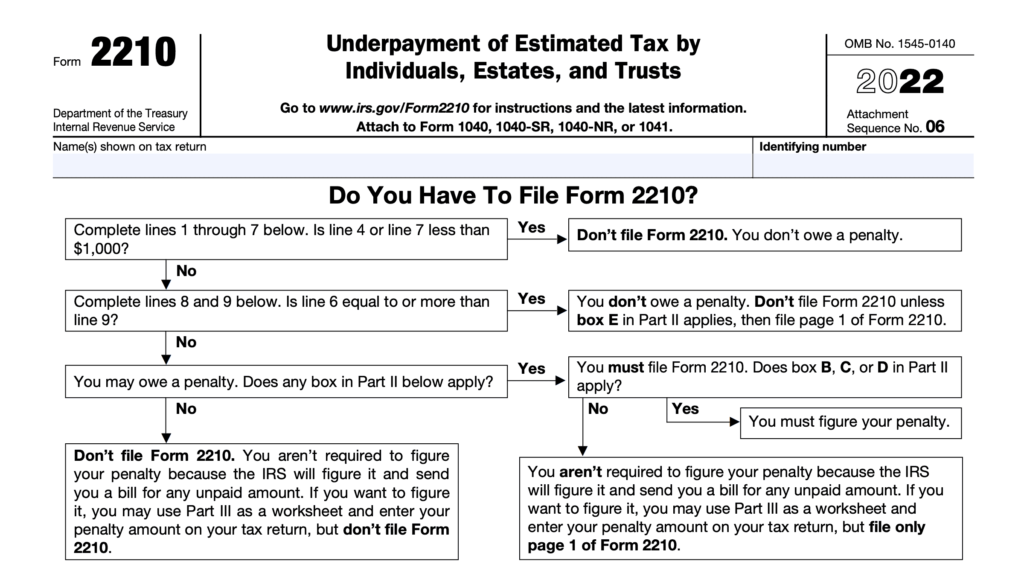
🧾 Got Hit With a Tax Penalty Even Though You Paid? Read This. 🎯 It happens more often than you’d think. You work hard, pay your taxes by year-end, and still get slapped with an IRS penalty.Why? Because the IRS wants you to pay as you earn—not just at the end. But don’t worry—Form 2210 can help you fix that. 💡 What’s Form 2210 (In Plain English)? If you: Didn’t pay enough estimated taxes throughout the year, or Made most of your money later in the year …the IRS might charge you a penalty—even if you paid everything in full by the deadline. Form 2210 lets you explain your situation and often helps reduce or remove the penalty. 💼 Real Story: A freelancer made $60,000 in 2024, but most of it came at the end of the year (Oct–Dec). Here’s how his tax payments looked: Q1: $300 Q2: $400 Q3: $500 Q4: $6,800 💥 The IRS said: “That’s too little too late. You owe a penalty.” But a friendly tax pro showed him Part IV of Form 2210, which allows you to show the IRS when you actually earned the income. ✅ He filed it—and the IRS waived the penalty. Boom. Full refund. 💬 Real Talk: “Paying taxes isn’t just about writing a check—it’s about telling your income story the right way.” If your income isn’t consistent, especially as a freelancer, business owner, or gig worker—Form 2210 can save you money. Don’t ignore it. Use it smartly. You might be surprised what the IRS will understand—if you just show them the full picture.

Got Hit With a Tax Penalty Even Though You Paid? (Form 2210) Read More »

HOW TO REGISTER A TRADEMARK IN THE USA

    1)    WHAT IS TRADEMARK? A trademark serves as a means for individuals and businesses to distinguish their goods and services from others in the market. It can take the form of a brand name, logo, phrase, or word, and is a valuable asset that needs legal protection through intellectual property rights. In the United States, the registration and administration of trademarks are overseen by the US Patent and Trademark Office (USPTO). While federal registration through the USPTO is the primary avenue for trademark protection, individual states also offer their own trademark registration systems. State-level registrations typically provide limited protection within a specific geographical area. On the other hand, federal registration provides comprehensive protection across the entire United States, offering broader recognition and legal benefits.   2)    WHO CAN APPLY FOR A TRADEMARK? In the United States, any individual or entity that meets the eligibility requirements can apply for a trademark. The bellow mentioned parties are eligible to apply for a trademark in the USA: 1. Individuals: Any person who uses a mark in connection with their goods or services may apply for a trademark. This includes individuals who operate businesses as sole proprietors or entrepreneurs. 2. Corporations and Companies: Business entities, such as corporations, limited liability companies (LLCs), partnerships, and other legally recognized organizations can apply for trademarks to protect their brands. 3. Foreign Entities: Foreign individuals or entities that use or intend to use a trademark in commerce within the United States can also apply for trademark registration. It’s worth noting that foreign applicants are required to have a U.S.-licensed attorney represent them in most cases. 4. Non-Profit Organizations: Non-profit organizations that use or plan to use a trademark in connection with their goods or services are eligible to apply for trademark registration. 5. Government Entities: Government agencies or departments can also apply for trademark registration if they use a mark to distinguish their goods or services. 3)    WHAT CAN BE TRADEMARKED? In the United States, a wide range of elements can be trademarked to protect a brand’s identity and distinguish its goods or services from others. The following are examples of what can be trademarked: 1. Brand Names: A brand name, such as Nike or Coca-Cola, can be trademarked to provide exclusive rights to use that name in connection with specific goods or services. 2. Logos and Symbols: Unique logos, symbols, or graphic designs that represent a brand or its products can be trademarked. For example, the Apple logo or the Nike “swoosh” symbol. 3. Slogans and Taglines: Catchy slogans, memorable phrases, or taglines associated with a brand can be trademarked. Such as “A to Z” for Amazon or “Das Auto” for Volkswagen. 4. Product Packaging: Distinctive product packaging, such as the shape of a Coca-Cola bottle or the design of a Pringles can be trademarked to protect the unique visual elements that consumers associate with a particular brand. 5. Product Names: Names given to specific products or services can be trademarked. For instance, the name “iPad” is a registered trademark for Apple’s tablet device. 6. Sounds: Unique sounds or rings that are used to identify a brand, such as the Intel “bong” sound or the NBC chimes, can be trademarked. 7. Colors: In certain circumstances, specific colors can be trademarked when they are closely associated with a brand and have acquired distinctiveness, such as the Tiffany blue color. 8. Fragrances: Rare or distinctive scents used in connection with products such as perfumes or air fresheners can possibly be trademarked. Additionally, the element should not be commonly used to describe the goods or services or directly describe a characteristic or quality of the goods or services. Generic and descriptive elements typically do not qualify for trademark protection. 4)    WHAT IS THE PROCEDURE FOR APPLYING FOR TRADEMARKS IN THE USA? The procedure for registering a trademark in the United States includes some steps. Below mentioned is an overview of the registration process: 1. Before filing an application, it is advisable to conduct a thorough trademark search to ensure that your desired mark is available and does not conflict with existing trademarks. This search can be performed independently using the USPTO’s trademark database or with the assistance of professional search firms. 2. Determine whether you will be filing based on the actual use of the mark in commerce or on the intent to use the mark in the future. This will depend on your specific circumstances and whether the mark is already in use at the time of filing. 3. Complete the Trademark Electronic Application System (TEAS) form, providing accurate information about the applicant, the mark itself and the goods or services associated with the mark. 4. File the trademark application electronically through the USPTO’s Trademark Electronic Application System (TEAS) and pay the required filing fee. The fee amount will depend on the filing basis and the number of classes of goods or services included in the application. 5. Once the application is submitted, it will be assigned to a trademark examiner at the USPTO. The examiner will review the application for compliance with legal requirements and assess potential conflicts with existing marks. If any issues or objections arise, they will be communicated through an Office Action. 6. If you receive an Office Action, you must respond within the specified timeframe, typically within six months, addressing any objections or issues raised by the examiner. If you do not respond then it may result in rejection of the application. 7. If the application is approved by the examiner, it will be published in the USPTO’s Official Gazette for a specified period, typically 30 days. During this time, third parties can oppose the registration if they believe it infringes on their existing rights. If no opposition is filed, the application proceeds to the next step. 8. If there are no successful oppositions, or if the application was based on intent to use and the mark has been used in commerce, the USPTO will issue a Notice of Allowance. You will need to submit


HOW TO REGISTER A TRADEMARK IN THE USA Read More »

Smart Tax Planning

Did you know corporations can face penalties if they don’t pay enough estimated taxes on time? That’s where Form 2220 comes in—it’s not just another IRS form; it’s your safeguard against unnecessary penalties! Here’s why it matters: Who Needs It? Corporations and entities that owe more than $500 in tax after credits. Businesses with fluctuating income throughout the year. What Does It Do? Helps calculate penalties for underpayment of estimated taxes. Allows you to adjust payments to avoid year-end surprises. Why It’s a Game Changer: Proactive planning through this form ensures compliance with IRS safe harbor rules. It can save you money by identifying shortfalls early and avoiding penalties. For instance, did you know that if your estimated payments cover 100% of last year’s tax or 90% of this year’s tax, you might avoid penalties entirely? Small details like this can make a big difference! Have questions about Form 2220 or related filings like 1120, 1120S, or 1065? Let’s connect and simplify your tax journey!

Smart Tax Planning Read More »

Qualified Business Income Deduction

Qualified Business Income (QBI) was introduced as part of the Tax Cuts and Jobs Act (TCJA), which was signed into law on December 22, 2017 and will remain valid till the end of 2025 unless extended or modified through legislation. TCJA included several provisions that benefited larger corporations and small businesses alike. It lowered the corporate tax rate from a maximum of 35% to 21% & helped small businesses in shape of QBI. Non-corporate taxpayers are permitted to claim a 20% deduction for income derived through qualified trades or businesses. The deduction is available to individuals who operate qualified businesses as sole proprietorships or through pass-through entities, including partnerships, LLCs and Subchapter S corporations. The QBI deduction is taken “Below the line” rather than in computing adjusted taxable income “above the line”. The deduction may thus be claimed whether the taxpayer itemizes deductions or claims the standard deduction Who qualifies for QBI: The QBI deduction is claimed with reference to the qualified business income from each specified trade or business. QBI is pivotal in determining the deduction available under Section 199A of the Internal Revenue Code, which allows eligible taxpayers to deduct up to 20% of their QBI. Wage and Qualified Property Limitation (WQP): The WQP limitation comes into play for taxpayers with QBI, particularly for high-income earners. This limitation is designed to phase out or limit the QBI deduction based on the amount of W-2 wages paid and the value of qualified property held by the business. Why WQP is important: The WQP limitation helps prevent high-income individuals from abusing the QBI deduction by ensuring that only those with substantial investments in their businesses can benefit fully. It incentivizes businesses to hire employees and invest in property, as the deduction is tied to wages and property. The phase in range for the most recent years is; For 2024, the threshold amount is USD 383,900 for married individuals who file a joint tax return, USD 191,950 for all other individuals

Qualified Business Income Deduction Read More »

Salaried Class Taxation In USA

US Federal income tax is applied on income of salaried individuals based on gross income less allowable deductions. The tax is initially collected as withholding from employees and deposited with the IRS by the employers each month. In computing the taxable income there are 2 types of deductions that are allowed to the employees. “Above the Line deductions” i-e Gross income less certain specified deductions to reach at Adjusted Gross income (AGI) and “Below the line deductions” i-e AGI less standard deductions/itemized deductions. 1.    Health savings account contributions (HAS): Contributions to HSA is deductible if individual is eligible 2.    Commuting expenses: Specifically for those employees who need to carry tools or equipment to the work place & incurred additional commuting cost for transportation. This additional cost is deductible. 3.    Automobile expenses: Expense incurred on Personal vehicle used for business purposes are deductible. There are 2 ways to calculate the deduction amount. a)     Actual basis: Actual expenses on running & maintaining the vehicle attributable to business use b)    Mileage rate: IRS publishes a standard business mileage rate each year for business miles driven. Normally this method is used. (67cents per mile for TY 2024) 4.    Travel expense: Reasonable and necessary travel expenses are deductible for business purposes. The primary intention of travel must be business. Meals are 50% deductible while on business travel. (very detailed rules available for interested people). 5.    Foreign travel: Not deductible unless it is purely for business purposes. 6.    Entertainment, meals and business gifts: 50% deductible subject to certain conditions and restrictions 7.    Home office expense: Subject to certain conditions these expense are deductible. In case of employees, it must be demonstrated that home office use is for the convenience of employer 8.    Dues and subscriptions: Dues and other payments to labor unions, trade associations and professional organizations are fully deductible. 9.    Education expenses: These are deductible subject to certain conditions and restrictions. 10. Interest on education loans: Interest paid on qualified education loans is deductible Above all are itemized deductions and employee has option either to claim total of itemized deductions or standard deductions whichever is more beneficial. Standard deduction amounts are adjusted each year for inflation & vary based on the filing status of the taxpayer. For 2024, the following are standard deduction amounts Single: $14,600 Married Filing Jointly: $29,200 Married Filing Separately: $14,600 Head of Household: $21,900 Above is a basic idea about deductions available to salaried/self employed persons and list is not exhaustive, may be more or less depending on case to case basis.

Salaried Class Taxation In USA Read More »

Understanding Short Term Rental and Real Estate Professional Status

Short-term rentals, such as those listed on 𝐀𝐢𝐫𝐛𝐧𝐛 𝐚𝐧𝐝 𝐕𝐑𝐁𝐎, are often misunderstood when it comes to tax implications—especially in relation to real estate professional status. Let’s break it down clearly: 𝐔𝐧𝐝𝐞𝐫 𝐓𝐫𝐞𝐚𝐬𝐮𝐫𝐲 𝐑𝐞𝐠𝐮𝐥𝐚𝐭𝐢𝐨𝐧 𝐒𝐞𝐜𝐭𝐢𝐨𝐧 𝟏.𝟒𝟔𝟗-𝟏𝐓(𝐞)(𝟑) there’s an important exception: if the average period of customer use for a property is 𝐬𝐞𝐯𝐞𝐧 𝐝𝐚𝐲𝐬 𝐨𝐫 𝐥𝐞𝐬𝐬, the activity is not considered a 𝐒𝐞𝐜𝐭𝐢𝐨𝐧 𝟒𝟔𝟗 𝐫𝐞𝐧𝐭𝐚𝐥 𝐚𝐜𝐭𝐢𝐯𝐢𝐭𝐲. This means that most short-term rental properties (like those on Airbnb and VRBO) are not classified as rental activities under Section 469 of the Internal Revenue Code. 𝐖𝐡𝐲 𝐝𝐨𝐞𝐬 𝐭𝐡𝐢𝐬 𝐦𝐚𝐭𝐭𝐞𝐫? It means you do not need to qualify as a real estate professional under IRC 𝐒𝐞𝐜. 𝟒𝟔𝟗(𝐜)(𝟕)(𝐁) to claim losses from short-term rentals as non-passive. You just need to show that you materially participated in the activity during the tax year, and your rental losses will be non-passive. This is a potential avenue for individuals with demanding jobs or business roles who cannot meet the real estate professional requirements but still want to deduct rental losses. 𝐁𝐮𝐭 𝐡𝐞𝐫𝐞’𝐬 𝐚 𝐤𝐞𝐲 𝐪𝐮𝐞𝐬𝐭𝐢𝐨𝐧: 𝐃𝐨 𝐡𝐨𝐮𝐫𝐬 𝐬𝐩𝐞𝐧𝐭 𝐨𝐧 𝐲𝐨𝐮𝐫 𝐬𝐡𝐨𝐫𝐭-𝐭𝐞𝐫𝐦 𝐫𝐞𝐧𝐭𝐚𝐥 𝐜𝐨𝐮𝐧𝐭 𝐭𝐨𝐰𝐚𝐫𝐝 𝐫𝐞𝐚𝐥 𝐞𝐬𝐭𝐚𝐭𝐞 𝐩𝐫𝐨𝐟𝐞𝐬𝐬𝐢𝐨𝐧𝐚𝐥 𝐬𝐭𝐚𝐭𝐮𝐬? 𝐓𝐰𝐨 𝐓𝐚𝐱 𝐂𝐨𝐮𝐫𝐭 𝐜𝐚𝐬𝐞𝐬 𝐬𝐚𝐲 𝐧𝐨. 𝐈𝐧 𝐭𝐡𝐞 𝐜𝐚𝐬𝐞𝐬 𝐨𝐟 𝐁𝐚𝐢𝐥𝐞𝐲 𝐯. 𝐂𝐨𝐦𝐦𝐢𝐬𝐬𝐢𝐨𝐧𝐞𝐫 (𝐓.𝐂. 𝐌𝐞𝐦𝐨 𝟐𝟎𝟎𝟏-𝟐𝟗𝟔) 𝐚𝐧𝐝 𝐓𝐨𝐝𝐝 𝐚𝐧𝐝 𝐏𝐚𝐦𝐞𝐥𝐚 𝐁𝐚𝐢𝐥𝐞𝐲 𝐯. 𝐂𝐨𝐦𝐦𝐢𝐬𝐬𝐢𝐨𝐧𝐞𝐫 (𝐓.𝐂. 𝐒𝐮𝐦𝐦𝐚𝐫𝐲 𝐎𝐩𝐢𝐧𝐢𝐨𝐧 𝟐𝟎𝟏𝟏-𝟐𝟐) the court ruled that taxpayers with short-term and long-term rentals could not aggregate the two types of properties for purposes of qualifying as a real estate professional. The logic here is that short-term rentals do not qualify as “𝐫𝐞𝐧𝐭𝐚𝐥 𝐚𝐜𝐭𝐢𝐯𝐢𝐭𝐢𝐞𝐬,” and therefore cannot count toward real estate professional status. 𝐎𝐧𝐞 𝐢𝐦𝐩𝐨𝐫𝐭𝐚𝐧𝐭 𝐩𝐨𝐢𝐧𝐭 𝐡𝐞𝐫𝐞: Owning a short-term rental doesn’t automatically mean you have a 𝐒𝐜𝐡𝐞𝐝𝐮𝐥𝐞 𝐂 business subject to self-employment tax. If you don’t provide substantial services to the tenant during their stay, it’s likely a 𝐒𝐜𝐡𝐞𝐝𝐮𝐥𝐞 𝐄 𝐚𝐜𝐭𝐢𝐯𝐢𝐭𝐲, not a Schedule C business. So, In real estate investments, short-term rentals offer a great opportunity to deduct rental losses as non-passive—without needing to qualify as a real estate professional.

Understanding Short Term Rental and Real Estate Professional Status Read More »